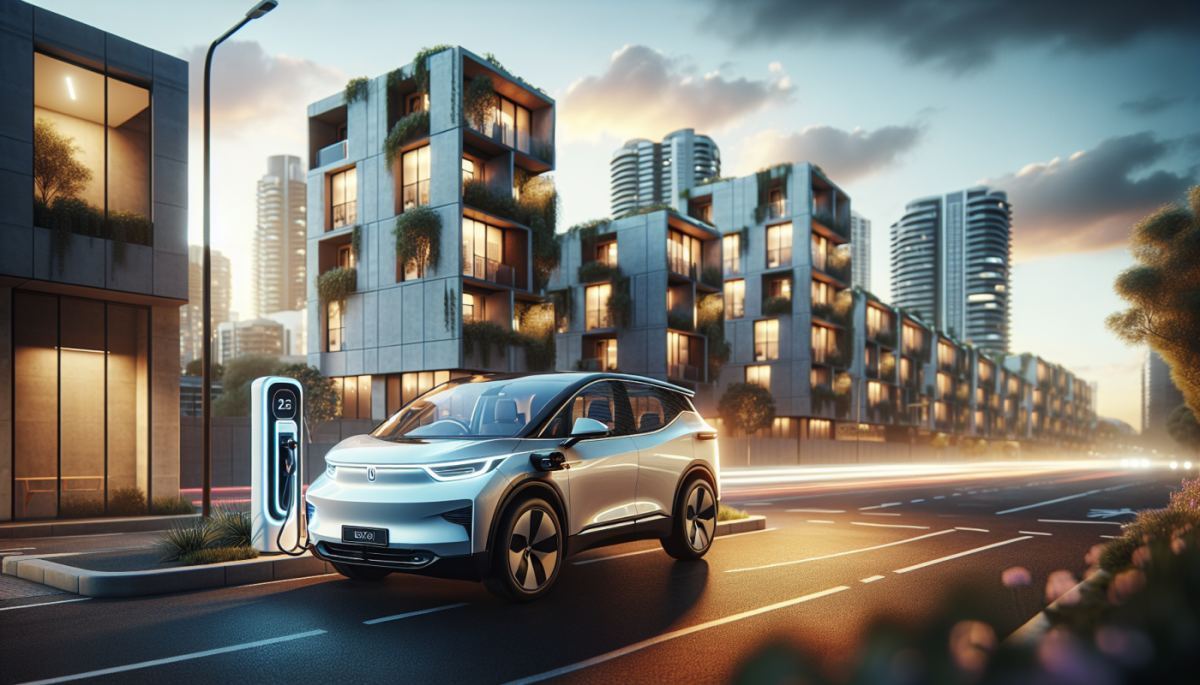
For years, the apartment building has been the quiet killer of electric vehicle adoption. Governments set ambitious EV targets, automakers roll out new models, and charging infrastructure expands along highways and in shopping centers, yet the roughly one-third of Australians who live in apartments have largely been left out of the conversation. The reason is not technical. It is political, bureaucratic, and deeply embedded in how strata-titled buildings govern themselves. A recent installation in Australia, the largest of its kind in the country's strata sector at 251 charging points, suggests that logjam may finally be breaking.
The scale of the project matters because it dismantles the most persistent objection strata committees have raised: that EV charging in multi-unit buildings is too complicated, too risky, or too expensive to be worth pursuing. When a single complex successfully installs and operates 251 chargers, the argument shifts from "whether" to "how." That is a meaningful psychological and procedural threshold. Strata committees, which are notoriously conservative bodies that govern shared property through consensus, tend to move only when precedent exists. A 251-point installation is a very loud precedent.
Understanding why apartments have lagged so far behind houses in EV charging access requires understanding how strata governance actually works. In Australia, any modification to common property, which typically includes the electrical infrastructure that would need upgrading to support EV chargers, requires a vote among owners. Depending on the jurisdiction and the nature of the work, that can mean a simple majority or a special resolution requiring 75 percent approval. Skeptical owners, concerns about liability, fears over electricity costs being shared unfairly, and simple inertia have historically been enough to block proposals.
The electrical complexity is real but manageable. Apartment buildings were not designed with EV charging in mind, and retrofitting them requires load management systems that prevent the building's grid connection from being overwhelmed when multiple vehicles charge simultaneously. Smart charging technology, which staggers and throttles charging based on available capacity, has matured significantly in recent years and is central to how large installations like this one function safely. The 251-charger project demonstrates that load management at scale is not theoretical. It works.
There is also a financial architecture that makes large strata installations viable. Rather than asking individual owners to fund their own charger and the associated electrical work, some providers now offer models where the infrastructure is installed at low or no upfront cost to the building, with costs recovered through per-kilowatt-hour charging fees over time. This shifts the economic risk away from the strata body and removes one of the most common objections committees face.
The ripple effects of normalizing EV charging in strata buildings extend well beyond convenience for apartment dwellers. Australia's EV uptake has been constrained partly by what researchers call "charging anxiety" among people who cannot charge at home. If you cannot plug in overnight, the calculus of owning an EV changes dramatically. You become dependent on public charging, which is slower, less convenient, and more expensive per kilowatt-hour than home charging. For apartment residents, this has functioned as a soft but powerful disincentive.
As strata buildings begin adopting charging infrastructure at scale, that disincentive weakens. More apartment residents will feel confident purchasing EVs, which increases demand, which in turn strengthens the business case for further charging investment. This is a classic adoption feedback loop, and the strata sector has been sitting outside it for too long.
There is a less obvious second-order effect worth watching. As EV charging becomes embedded in apartment buildings, it will likely become a factor in property valuations and rental desirability. Buildings with charging infrastructure may command premiums, which creates a financial incentive for strata committees that previously had none. That incentive, once it becomes visible in the market, could accelerate adoption faster than any regulation.
Australia's federal and state governments have been nudging the strata sector through legislative reform, with several states updating strata laws to make it easier for individual owners to install chargers even without full committee approval. But legislation moves slowly and implementation is uneven. What a 251-charger installation does that legislation cannot is demonstrate, concretely and visibly, that the problem is solved. The question now is how quickly the rest of the sector decides to catch up, and whether the financial models that made this project work can be replicated at buildings with older, more constrained electrical infrastructure, where the hard cases still wait.

Discussion (0)
Be the first to comment.
Leave a comment