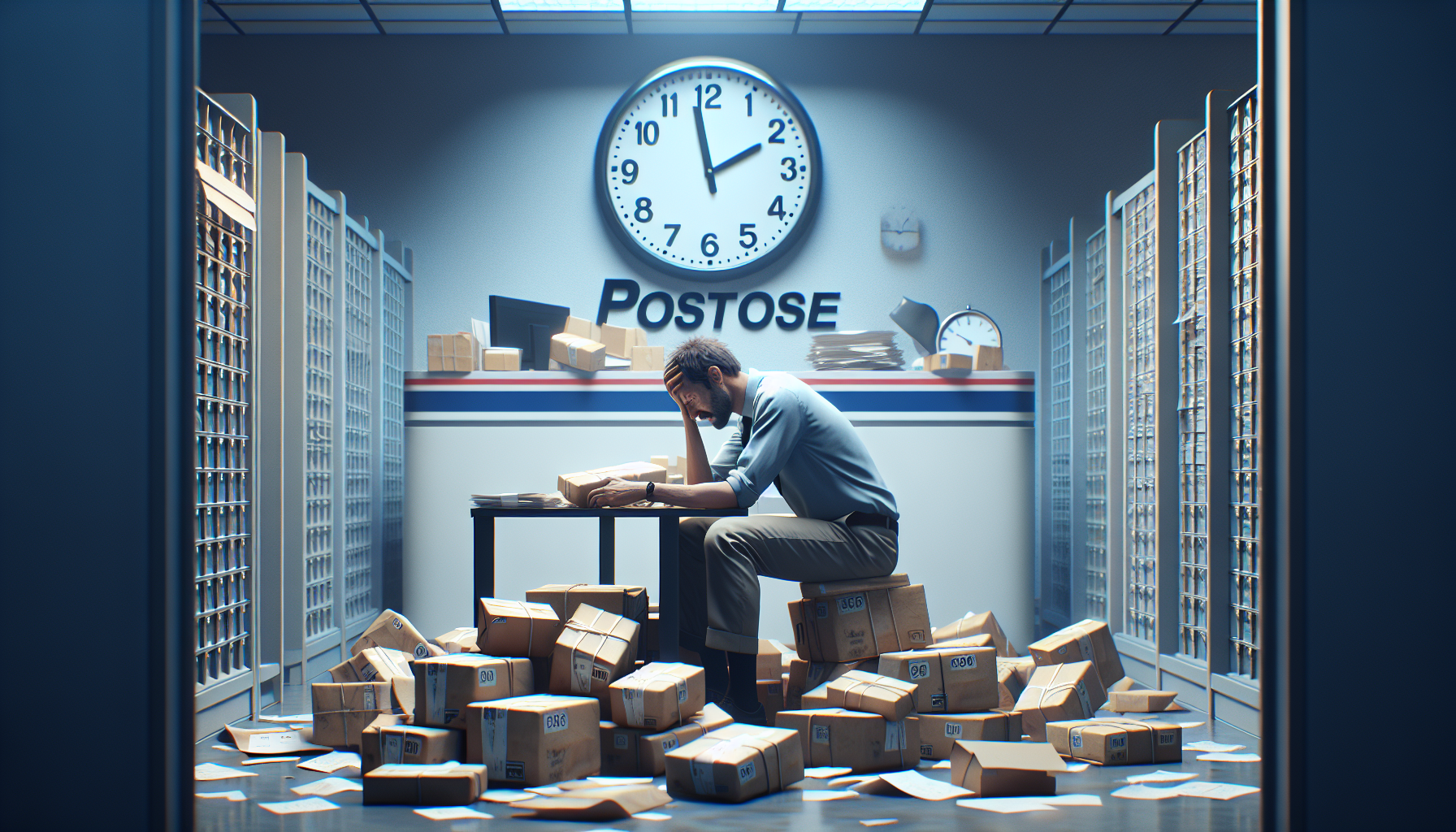
The United States Postal Service has survived wars, recessions, and the slow death of the letter-writing era. Now, according to its own Postmaster General, it may not survive the next twelve months without congressional intervention. At a recent congressional hearing, USPS leadership warned lawmakers that the service could be out of cash within a year, and formally requested that Congress raise its borrowing limits to keep operations alive.
This is not a sudden crisis. It is the visible endpoint of a long institutional unraveling that most Americans have been too busy to notice. The USPS operates under a uniquely punishing set of financial constraints that no private company and few public agencies face. It cannot raise prices freely, it cannot easily shed unprofitable routes, and for years it was required to pre-fund retiree health benefits decades in advance, a mandate that drained billions from its reserves and that critics across the political spectrum have long called absurd. Congress has loosened some of those rules in recent years, but the structural damage was already done.
Volume is the other half of the story. First-class mail, the traditional revenue engine of the postal system, has been in freefall for two decades as email and digital billing replaced the envelope. Package delivery, which surged during the pandemic and briefly looked like a lifeline, has since normalized and faces brutal competition from Amazon's own logistics network, UPS, and FedEx. The USPS finds itself in the uncomfortable position of being indispensable to rural America and small businesses while being financially outmaneuvered at every turn by private competitors who get to choose only the profitable routes.
The request to raise the borrowing limit is, on its surface, a technical ask. But it signals something more uncomfortable: the USPS has likely exhausted its internal options. Borrowing limits exist precisely to prevent institutions from papering over structural problems with debt, and raising them without accompanying reform is the kind of short-term fix that tends to make long-term problems worse. If Congress simply extends the credit line without addressing the underlying cost structure or revenue model, the postal service will be back at the same hearing in two or three years, asking for more.
What makes this politically complicated is that the USPS is not just a mail carrier. It is infrastructure. It delivers prescription medications to rural households, processes absentee ballots, and serves as the last-mile logistics provider for thousands of small e-commerce businesses that cannot afford private carrier rates. Any disruption to service does not stay contained to the post office. It ripples outward into healthcare access, democratic participation, and small business survival in ways that are genuinely hard to quantify but very easy to feel.
There is also a workforce dimension that rarely gets the attention it deserves. The USPS employs roughly 640,000 people, making it one of the largest employers in the United States and a significant source of stable, unionized jobs for workers without college degrees. A cash crisis that forces layoffs or benefit cuts would send shockwaves through communities that are already economically fragile, and would do so quietly, without the dramatic headlines that a corporate bankruptcy might generate.
Here is the consequence that tends to get lost in the budget debate: if the USPS is forced to cut service frequency or raise rates significantly to survive, it will accelerate the very volume decline that created the crisis in the first place. Businesses and individuals who are on the fence about switching to digital alternatives will make the switch. That reduces revenue further, which forces more cuts, which drives more customers away. This is a classic demand-destruction feedback loop, and it is the kind of spiral that is very difficult to reverse once it gains momentum.
The irony is that the postal service's problems are not really about inefficiency in the way that critics often suggest. They are about a business model that was designed for a world that no longer exists, governed by rules written by a Congress that has never quite decided whether the USPS is a public utility or a self-sustaining business. That ambiguity has been manageable in good times. In a cash crisis, it becomes the core of the problem.
Congress has a narrow window to make a real decision rather than a deferred one. The choice is not simply whether to lend the postal service more money. It is whether the United States still believes that universal mail service is a public good worth paying for, or whether it is willing to find out what happens when it isn't.




Discussion (0)
Be the first to comment.
Leave a comment