
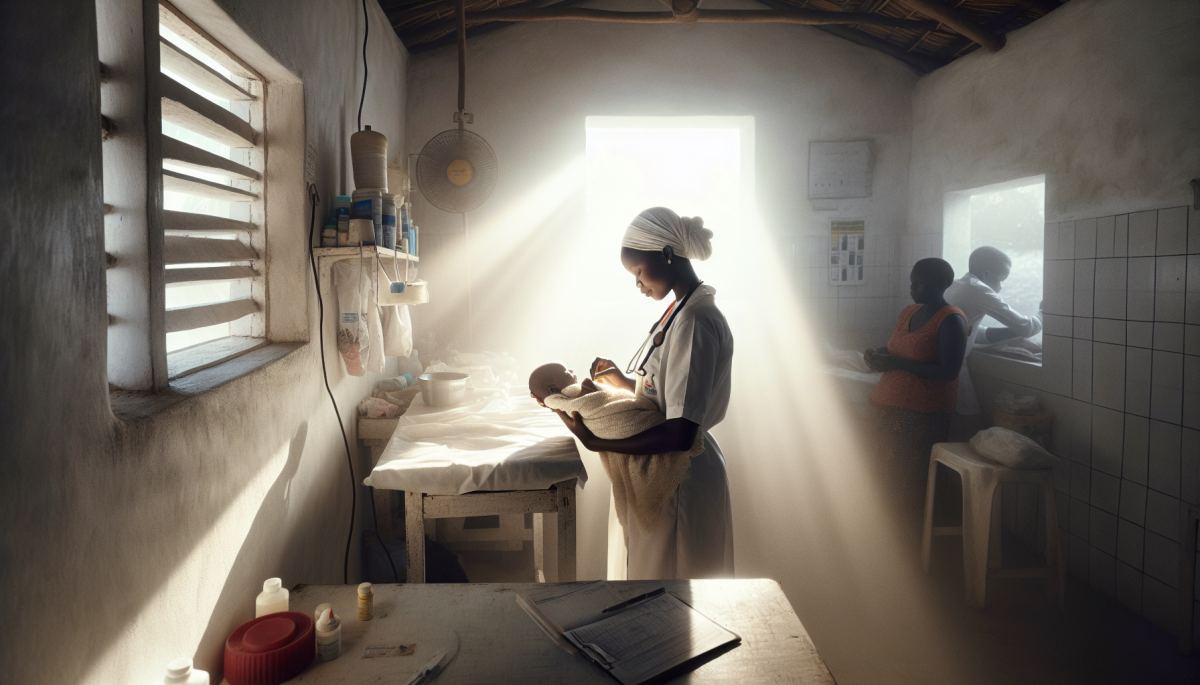
For decades, one of the quietest tragedies in global health has been hiding in plain sight: newborns and young infants with malaria had no treatment formulated specifically for them. Caregivers and clinicians in endemic regions were left improvising, crushing adult tablets, estimating doses, and hoping for the best. That changed this month when the World Health Organization granted prequalification status to the first malaria treatment developed specifically for newborns and young infants weighing between two and five kilograms, a milestone announced ahead of World Malaria Day on April 25.
WHO prequalification is not a ceremonial badge. It signals that a medicine meets the agency's rigorous international benchmarks for quality, safety, and efficacy, and it is the threshold that unlocks procurement by major global health buyers including UNICEF and the Global Fund to Fight AIDS, Tuberculosis and Malaria. Without it, even a promising drug struggles to reach the clinics and community health workers who need it most. With it, the supply chain begins to move.
The significance of this particular prequalification is hard to overstate. Malaria kills hundreds of thousands of people each year, and children under five account for the overwhelming majority of those deaths. Within that group, the very youngest, newborns and infants under five kilograms, have historically occupied a regulatory and pharmaceutical blind spot. Drug developers rarely designed trials around this population, partly because of the ethical and logistical complexity of neonatal research, and partly because the commercial incentives were weak. The result was a treatment gap that persisted for generations while the disease did not.
Prequalification matters most at the intersection of procurement and policy. When a product earns WHO prequalification, it becomes eligible for purchase through pooled international mechanisms that drive down costs and guarantee volume. This creates a feedback loop that benefits manufacturers, health systems, and patients simultaneously: assured demand encourages production, production at scale reduces unit costs, and lower costs expand coverage. For a treatment targeting one of the most underserved and fragile patient populations on earth, that loop could prove transformative.
The WHO announcement also included new diagnostic tests added to the prequalified list, a detail that deserves more attention than it typically receives. Accurate, rapid diagnosis is not a secondary concern in malaria control. It is the gatekeeper. Treating presumptively, without confirmation, contributes to antimalarial drug resistance, wastes limited medicines, and misses co-infections. Expanding the roster of quality-assured diagnostics strengthens the entire clinical pathway, from the moment a feverish infant arrives at a health post to the moment treatment begins.
There is a systems dimension here that rarely surfaces in coverage of individual drug approvals. The prequalification of a neonatal formulation does not automatically translate into trained health workers who know how to administer it, cold chains capable of preserving it, or caregivers who recognize the symptoms of malaria in a two-week-old infant early enough to seek care. Each of those links in the chain has its own failure modes. A new medicine entering a fragile health system encounters friction at every node.
The longer-term consequence worth watching is what this prequalification signals to the pharmaceutical development ecosystem. Regulatory milestones create precedent. If a neonatal malaria formulation can navigate the path to WHO prequalification, it demonstrates that the pathway exists for other neglected pediatric populations and other neglected diseases. Funders, researchers, and manufacturers pay attention to proof of concept. The pipeline for pediatric tropical disease treatments has historically been thin not because the need was absent but because the roadmap was unclear and the financial return uncertain.
There is also a resistance dynamic to consider. Expanding access to appropriate, correctly dosed treatment for the youngest patients reduces the likelihood of subtherapeutic dosing, which is one of the conditions under which drug-resistant parasite strains are more likely to emerge and spread. In that sense, getting the dose right for a two-kilogram infant is not just a matter of individual care. It is a form of collective protection for the broader treatment arsenal that the world depends on.
Malaria has frustrated eradication efforts for more than a century, partly because the parasite is adaptive and partly because the systems built to fight it have always had gaps. Closing the gap for the smallest and most vulnerable patients will not end the disease. But it removes one of the most morally indefensible holes in the global response, and it does so through a mechanism, prequalification, that is designed to pull markets and health systems in the same direction at once. Whether the rest of the system moves fast enough to meet this moment is the question that will define the next chapter.


Discussion (0)
Be the first to comment.
Leave a comment