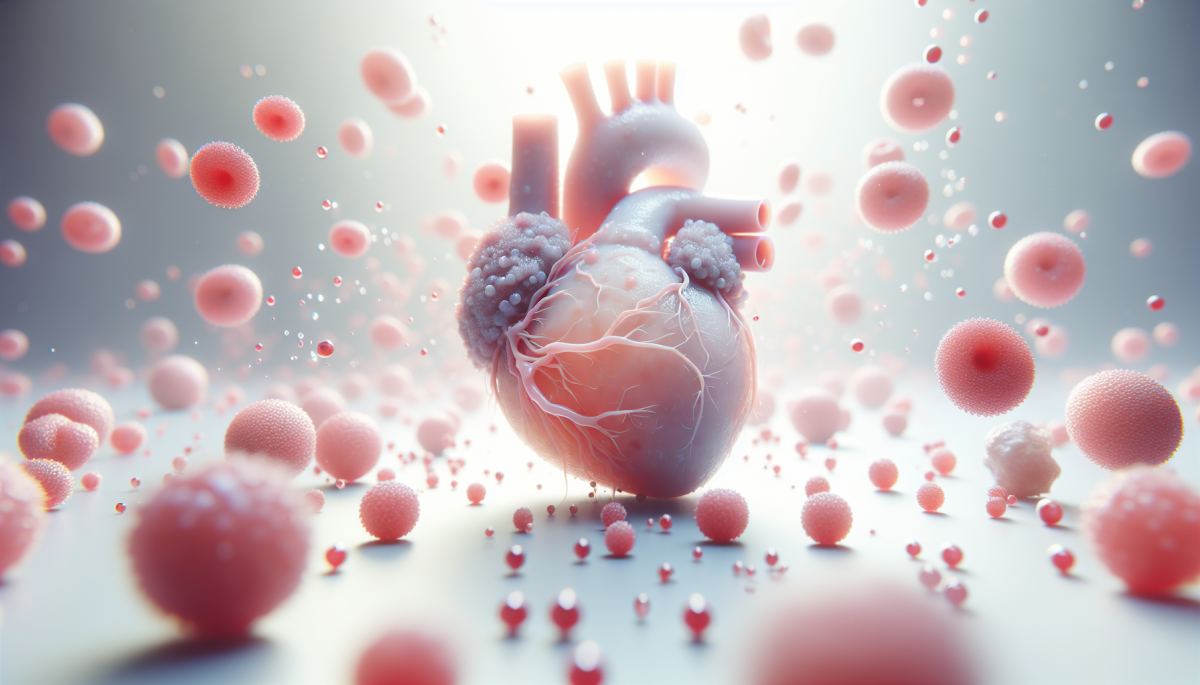
Heart muscle cells have long been considered one of biology's most stubborn dead ends. Once a cardiomyocyte matures, it essentially stops dividing, which means that when a heart attack kills a patch of cardiac tissue, the damage is largely permanent. Scar tissue fills the void, the heart stiffens, and the patient spends the rest of their life managing a muscle that is quietly failing. A new study is now challenging that assumption in a meaningful way, showing that partial cellular reprogramming can coax mouse cardiomyocytes back into a dividing state, reducing the damage caused by myocardial infarction.
The research, published in a peer-reviewed journal, found that by partially resetting the epigenetic clock of heart muscle cells, scientists could prompt those cells to complete division rather than stalling out, as they typically do in adult mammals. The key word here is "partial." Full reprogramming, the kind that theoretically winds a cell all the way back to a pluripotent stem-cell state, carries serious risks, including tumor formation. Partial reprogramming attempts to capture the regenerative benefits of that reset without crossing into dangerous territory. In mice subjected to induced heart attacks, the approach measurably reduced myocardial damage, suggesting the heart retained more functional tissue than it otherwise would have.
To understand why this matters, it helps to understand why adult heart cells stopped dividing in the first place. In most mammals, cardiomyocytes exit the cell cycle shortly after birth. The leading hypothesis is that this is an evolutionary trade-off: a constantly dividing heart muscle would be mechanically unreliable, so the body sacrifices regenerative capacity for structural stability. Zebrafish and some salamanders never made this trade, and they can regenerate cardiac tissue with remarkable efficiency. Humans, unfortunately, are not zebrafish.
The epigenetic mechanisms that enforce this exit from the cell cycle are well-documented. Certain genes associated with proliferation get silenced through methylation and other modifications, while the machinery for cell division is essentially mothballed. Reprogramming factors, most famously the Yamanaka factors Oct4, Sox2, Klf4, and c-Myc, can reverse some of these modifications. The challenge researchers have been wrestling with for years is how to apply just enough of that reversal to unlock division without destabilizing the cell's identity entirely.
This new study appears to have found a workable window, at least in mice. By delivering reprogramming factors in a controlled, time-limited way, the team observed cardiomyocytes completing cytokinesis, the final physical splitting of one cell into two, at rates that were meaningfully higher than in control animals. The hearts of treated mice showed reduced infarct size, which is the area of dead or dying tissue, compared to untreated counterparts.
The systems-level implications of this finding extend well beyond the immediate biology. Myocardial infarction is the leading cause of heart failure globally, and heart failure itself is one of the most expensive chronic conditions in modern healthcare. In the United States alone, heart failure costs an estimated $30 billion annually in direct medical expenses, a figure projected to rise sharply as the population ages. If partial reprogramming could reliably reduce infarct size even modestly, the downstream effects on heart failure incidence, hospitalization rates, and long-term cardiac function could be substantial.
There is also a second-order consequence worth watching carefully. As partial reprogramming techniques mature and attract investment, the pressure to move from mouse models to human trials will intensify. That pressure is not inherently bad, but the history of cardiac regenerative medicine is littered with promising animal results that did not survive translation to human biology. Stem cell therapies for the heart generated enormous excitement in the early 2000s before a series of high-profile replication failures cooled enthusiasm considerably. Partial reprogramming is mechanistically different, but the translational gap remains formidable.
What makes this moment genuinely interesting is that the field is converging from multiple directions at once. Advances in gene delivery, particularly with refined adeno-associated virus vectors, are making it more feasible to target specific tissues with reprogramming factors in a controlled way. Meanwhile, the broader longevity research community has been pouring resources into partial reprogramming as a potential aging intervention, which means the underlying technology is maturing faster than it would if cardiac repair were the only application driving it.
The mouse heart that healed a little better after a simulated heart attack is a small data point. But it sits inside a much larger story about whether the biological rules governing tissue regeneration are fixed or negotiable, and the answer to that question will reshape medicine in ways that are still difficult to fully anticipate.
References
- Takahashi et al. (2006) — Induction of Pluripotent Stem Cells from Mouse Embryonic and Adult Fibroblast Cultures by Defined Factors
- Porrello et al. (2011) — Transient Regenerative Potential of the Neonatal Mouse Heart
- Virani et al. (2021) — Heart Disease and Stroke Statistics 2021 Update
- Mosteiro et al. (2016) — Tissue damage and senescence provide critical signals for cellular reprogramming in vivo
- Chien et al. (2008) — Regenerative Medicine and Human Hearts


Discussion (0)
Be the first to comment.
Leave a comment