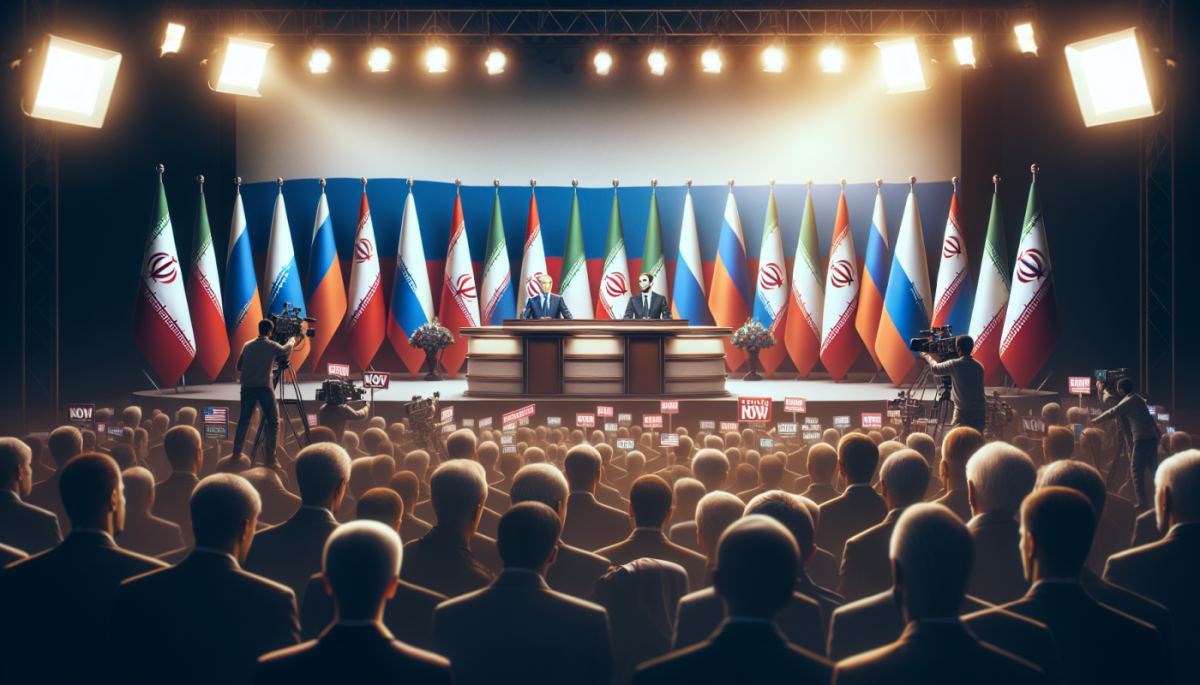
When missiles started flying between Israel and Iran, the first beneficiary was not in Tehran or Tel Aviv. He was in Moscow. Vladimir Putin, whose war economy has been grinding under the weight of Western sanctions and a grinding attritional conflict in Ukraine, found himself the quiet winner of a Middle Eastern crisis he did not start but was perfectly positioned to exploit. Oil prices spiked, Russian export revenues climbed, and the geopolitical attention of Washington and its allies fractured in exactly the way the Kremlin has long hoped for.
The mechanism is straightforward enough. Russia remains one of the world's largest crude exporters, and any serious disruption to Persian Gulf shipping lanes or Iranian supply sends energy markets into a defensive crouch. Traders price in risk before a single tanker is touched. That premium flows directly into the Russian federal budget, which has become almost entirely dependent on hydrocarbon revenues to fund both the war in Ukraine and the domestic spending that keeps Putin's approval ratings stable. A sustained oil price elevation of even ten to fifteen dollars per barrel translates into billions of additional dollars over a matter of months — money that buys shells, salaries, and silence.
Beyond the balance sheet, there is a subtler and arguably more valuable prize: distraction. Every hour that American lawmakers debate military aid to Israel, every week that European foreign ministers convene emergency sessions on Iranian nuclear escalation, is an hour and a week not spent tightening the sanctions architecture around Russia or accelerating weapons deliveries to Kyiv. Ukraine's supporters have finite political bandwidth, and the Middle East has a long history of consuming it entirely. Putin understands this dynamic intuitively. He has spent years cultivating relationships across the region precisely to ensure that when crises erupt, Russia is never entirely on the outside.
His ties to Iran are particularly instructive here. Russia has received Iranian-made Shahed drones in significant quantities, using them to devastate Ukrainian power infrastructure through the winter months. In return, Moscow has provided diplomatic cover, technology transfers, and a kind of great-power legitimacy that Tehran craves. The two countries are not allies in any classical sense — their interests diverge sharply on questions from Syria to Central Asia — but they are united by a shared interest in weakening the rules-based international order that constrains them both. An Iran under military pressure from Israel and potentially the United States is an Iran that needs Russia more, not less, which paradoxically strengthens Putin's hand even as one of his suppliers absorbs punishment.
And yet the windfall carries its own instabilities. Oil markets are notoriously poor at sustaining fear premiums once the immediate shock fades. If the conflict between Israel and Iran remains contained — a series of strikes and counter-strikes rather than a full regional war — prices will drift back toward their pre-crisis levels within weeks. Russia's budget arithmetic, which was already strained before the latest escalation, does not improve simply because of a temporary spike. The International Monetary Fund and independent analysts have repeatedly flagged that Russia's fiscal breakeven oil price has risen sharply since 2022, as military spending has ballooned. A brief windfall does not fix a structural problem.
There is also a second-order consequence that deserves more attention than it typically receives. A prolonged Middle Eastern crisis accelerates the very energy transition dynamics that threaten Russia's long-term economic model. Every spike in oil prices makes the business case for electric vehicles more compelling, speeds up European investment in alternative energy infrastructure, and reminds governments from Berlin to Seoul why dependence on hydrocarbon exporters is a strategic liability. The short-term revenue gain and the long-term demand destruction are two sides of the same coin, and Russia is collecting on one while the other quietly compounds.
Putin is a tactician of genuine skill, and he will extract every ruble he can from this moment. But tactics are not strategy, and a war economy running on windfall revenues and borrowed time is not a foundation. The more interesting question — the one that will matter in two or three years rather than two or three months — is whether the structural erosion of Russia's energy leverage accelerates faster than Moscow can adapt. History suggests that petrostates rarely see the cliff coming until they are already over it.
Discussion (0)
Be the first to comment.
Leave a comment