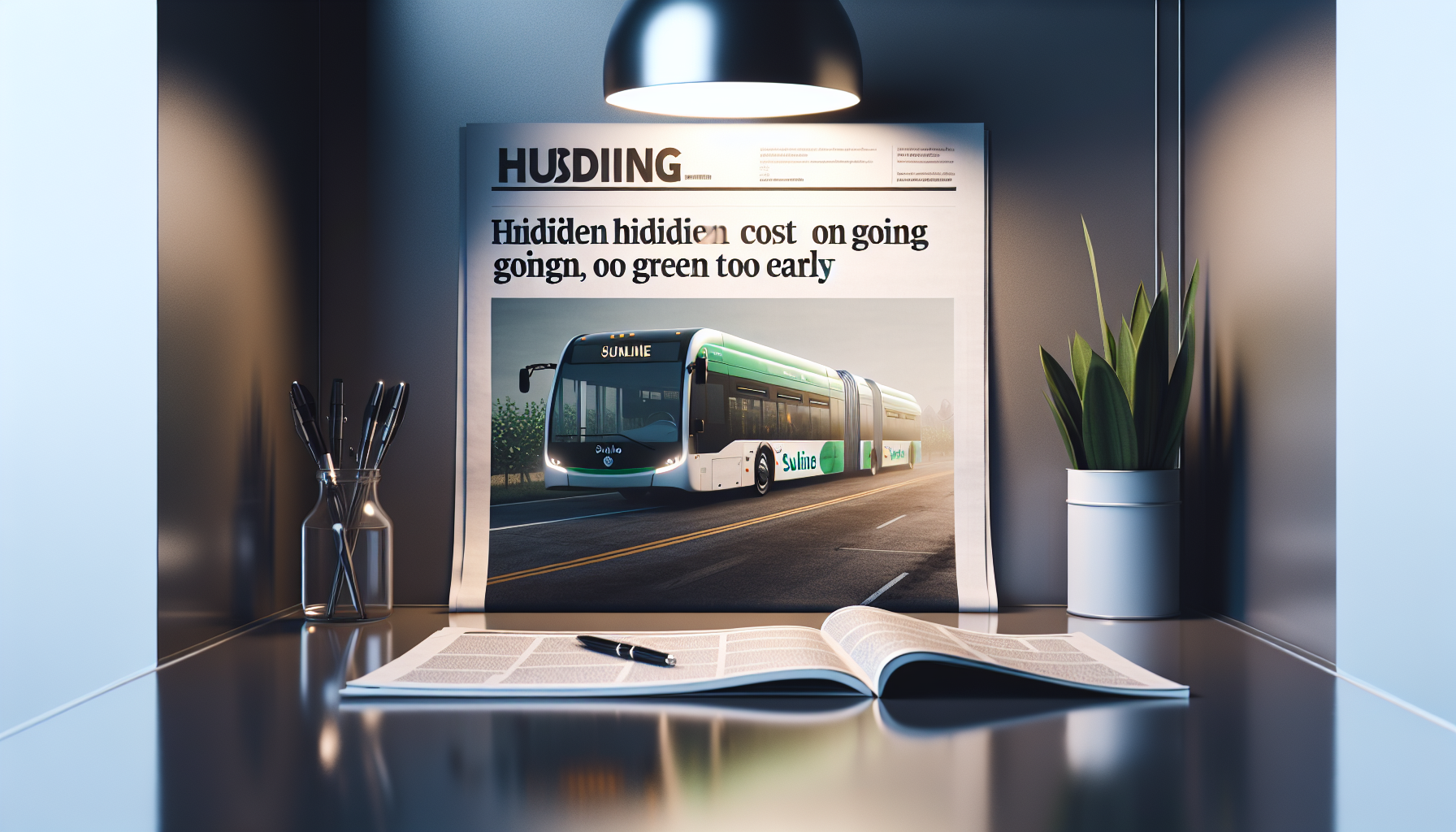
SunLine Transit Agency has spent 25 years trying to make hydrogen buses work in the Coachella Valley, and what it has learned is both instructive and uncomfortable. The agency, which serves the sprawling western Riverside County region that includes Palm Springs and the agricultural communities stretching toward the Salton Sea, began producing and dispensing hydrogen around the year 2000. It has cycled through multiple generations of fuel cell buses, built out on-site hydrogen infrastructure, and positioned itself as one of the most committed hydrogen transit programs in North America. The honest accounting of that commitment, though, tells a more complicated story than the press releases suggest.
The core problem is one that haunts the entire hydrogen economy: where the hydrogen actually comes from. SunLine has relied heavily on what the industry calls gray hydrogen, meaning hydrogen produced from natural gas through a process called steam methane reforming. This method releases carbon dioxide as a byproduct and, depending on how upstream methane leakage is counted, can carry a carbon footprint that rivals or exceeds that of a clean diesel bus. The "hydrogen" label provides a kind of rhetorical cover that the underlying chemistry does not always support. When a fuel cell bus rolls silently through Palm Springs emitting only water vapor from its tailpipe, the emissions picture looks pristine. Zoom out to the production facility supplying that hydrogen, and the picture changes considerably.
This is not a problem unique to SunLine. It is a structural feature of the hydrogen economy as it currently exists in the United States, where roughly 95 percent of hydrogen is still produced from fossil fuels. Green hydrogen, made by splitting water using renewable electricity through electrolysis, remains significantly more expensive and is not yet available at the scale transit agencies need. SunLine has explored on-site renewable hydrogen production, but the economics have consistently resisted easy solutions. The cost per kilogram of hydrogen for transit use has remained stubbornly high, making the per-mile operating cost of fuel cell buses difficult to justify against battery electric alternatives whose prices have dropped sharply over the same period.
The financial architecture of SunLine's hydrogen program is worth examining carefully, because it illustrates a feedback loop that affects publicly funded clean technology pilots everywhere. Federal and state grants made the initial infrastructure investments possible, which created institutional momentum and a sunk-cost logic that made it difficult to pivot even as the economics of competing technologies shifted. Each new round of grant funding reinforced the hydrogen pathway, and each new fleet of buses deepened the agency's dependence on hydrogen dispensing infrastructure that would be stranded if the program were abandoned. Transit agencies are not venture capital firms. They cannot easily write off a failed technology bet and move on. They serve real communities, often lower-income ones, and their capital decisions lock in operating costs for decades.
The irony is that SunLine's persistence has generated genuinely valuable data. The agency knows more about real-world fuel cell bus performance, hydrogen dispensing reliability, and maintenance costs than almost any comparable organization. That knowledge has informed federal policy discussions and helped manufacturers understand where the technology falls short. But knowledge production is a public good that does not show up on a transit agency's balance sheet, and the communities riding those buses have effectively subsidized an industry-wide learning curve.
The second-order consequence worth watching is what SunLine's experience does to the broader hydrogen-for-transit narrative at exactly the moment when federal investment in clean hydrogen is accelerating. The Bipartisan Infrastructure Law and the Inflation Reduction Act together direct billions of dollars toward hydrogen hubs and production incentives, with transit applications frequently cited as a key use case. If the honest performance record from one of the country's most experienced hydrogen transit operators suggests that gray hydrogen undermines the climate case and that green hydrogen remains cost-prohibitive at scale, policymakers need to grapple with that evidence rather than paper over it with optimistic projections.
Battery electric buses have not solved every problem either. They carry their own infrastructure costs, charging time constraints, and supply chain dependencies. But their cost trajectory is moving in a direction that hydrogen has not yet matched, and the emissions math for battery electrics powered by an increasingly renewable grid improves automatically over time without requiring any change in the bus itself. A hydrogen bus running on gray hydrogen does not get cleaner as the years pass.
SunLine deserves credit for doing the hard work of figuring this out in public, at scale, over a long period of time. The question now is whether the institutions funding the next generation of hydrogen transit investments will read that record carefully, or whether the political appeal of hydrogen as a universal clean energy solution will continue to outrun the operational reality that one California desert transit agency has spent a quarter century documenting.
References
- U.S. Department of Energy (2023) — Hydrogen Shot and Clean Hydrogen Strategy
- International Council on Clean Transportation (2021) — Fuel cell electric buses: A review of the technology and its role in decarbonizing transit
- BloombergNEF (2023) — Electric Vehicle Outlook 2023
- Rocky Mountain Institute (2022) — The True Cost of Hydrogen: Accounting for Upstream Methane Emissions
- U.S. Department of Transportation Federal Transit Administration (2023) — Zero Emission Bus Research



Discussion (0)
Be the first to comment.
Leave a comment