
Brazil sits atop one of the largest rare earth deposits on the planet, and for decades that fact has amounted to little more than a geological footnote. Now, with Washington and Beijing locked in an intensifying contest over the minerals that power electric vehicles, wind turbines, and defense systems, pro-government lawmakers in Brasília are pushing to change that calculus entirely, arguing that Brazil should build a state-owned developer to extract and process rare earths on its own terms.
The proposal reflects something deeper than resource nationalism. It is a calculated read of a genuinely rare geopolitical moment. The United States has spent the better part of three years trying to untangle its rare earth supply chains from Chinese dominance, a dependency that became impossible to ignore after Beijing demonstrated its willingness to use mineral exports as a diplomatic lever. China currently controls roughly 60 percent of global rare earth mining and an even larger share of processing capacity, according to the U.S. Geological Survey. That concentration of power has sent American policymakers scrambling for alternatives, and Brazil, with its vast deposits of neodymium, praseodymium, and other critical minerals, looks increasingly like an answer.
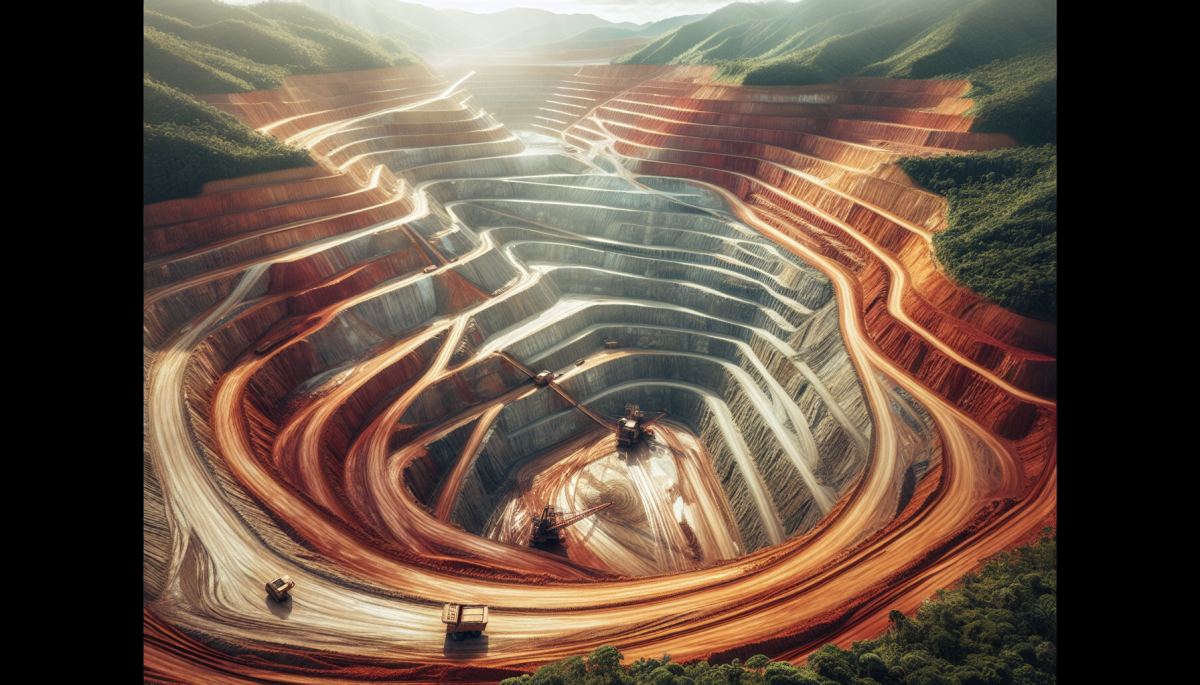
But Brazilian lawmakers are not simply offering themselves up as a convenient substitute supplier. The push for a state-owned enterprise signals that Brazil wants to capture more of the value chain, not just dig up ore and ship it abroad. This is the lesson that resource economists have been pressing on developing nations for years: the real money in critical minerals is not in extraction but in processing, refining, and eventually manufacturing the components that go into finished green technologies. Countries that sell raw ore tend to stay poor. Countries that refine and fabricate tend to industrialize.
The model being floated in Brasília draws obvious comparisons to Petrobras, the state oil company that became both a symbol of Brazilian industrial ambition and, at various points, a cautionary tale about corruption and inefficiency. Supporters of a rare earths equivalent argue that the strategic importance of the sector justifies public ownership and that private capital alone will not move fast enough or invest deeply enough in the processing infrastructure Brazil needs. Critics, predictably, worry about repeating Petrobras's more troubled chapters.
What makes this debate particularly consequential is the feedback loop it could trigger in global supply chains. If Brazil does establish a credible state-backed rare earths operation, it changes the negotiating posture of every country currently trying to court Brazilian mineral access. The United States, which has been deepening its critical minerals partnership with Brazil under a bilateral framework signed in 2023, would suddenly be dealing not with a passive supplier but with a sovereign industrial actor with its own pricing power and export priorities. That is a fundamentally different relationship, and not necessarily a simpler one.
There is also the environmental dimension, which rarely gets the attention it deserves in these conversations. Rare earth mining is not clean. Processing in particular generates radioactive waste and significant water contamination risks. Brazil's Amazon basin and Cerrado savanna, two of the most biodiverse ecosystems on Earth, sit in proximity to some of the country's richest deposits. A state-owned developer with a mandate to drive economic development could accelerate extraction in ways that private investors, sensitive to ESG scrutiny, might not. The green energy transition, in other words, carries its own ecological costs, and those costs have a way of concentrating in the Global South.
The deeper systems question here is about who gets to set the terms of the energy transition. For most of the past decade, that question has been answered largely by the countries that manufacture the end products: China, the United States, Germany, South Korea. Supplier nations have been price-takers. The Brazilian legislative push, whatever its ultimate fate in Brasília's fractious political environment, represents a growing insistence among resource-rich developing countries that this arrangement is neither fair nor permanent.
Lula's government has been explicit about framing critical minerals as a development opportunity rather than simply an export commodity, and that framing has found genuine resonance across the political spectrum in Brazil. Whether the institutional capacity exists to execute on that vision is a separate and harder question. Building a competitive state-owned mining and processing enterprise from scratch, in a sector dominated by Chinese technical expertise and capital, is an enormous undertaking.
What seems increasingly clear is that the global scramble for rare earths is entering a new phase, one in which the countries sitting on the deposits are beginning to act like they know exactly how much leverage they hold. How Washington and Beijing respond to that shift will shape the economics of the green transition for decades.
References
- U.S. Geological Survey (2024) — Mineral Commodity Summaries: Rare Earths
- Castillo et al. (2020) — Feeding the Green Dragon: China's Rare Earth Dominance
- U.S. Department of State (2023) — U.S.-Brazil Critical Minerals Partnership
- Climate Home News (2025) — As US and China seek rare earths, Brazilian lawmakers push for state-owned developer
Discussion (0)
Be the first to comment.
Leave a comment