Sarcopenia, the progressive loss of muscle mass and strength that accompanies aging, is one of the most quietly devastating forces in geriatric health. It robs older adults of independence, increases fall risk, and strains healthcare systems at a scale that rarely makes headlines. Now, researchers publishing in Aging Cell have identified a potentially powerful lever for fighting it: suppressing the receptor for ghrelin, the so-called "hunger hormone," appears to improve muscle function in older mice in ways that could eventually reshape how medicine approaches age-related physical decline.
Ghrelin is best known for its role in appetite regulation. Produced primarily in the stomach, it signals the brain to stimulate hunger and plays a role in energy balance. But ghrelin's reach extends well beyond the gut-brain axis. Its receptor, the growth hormone secretagogue receptor (GHSR), is expressed in skeletal muscle tissue, and researchers have been quietly building a case that this pathway does something important in the context of aging muscle. The new findings suggest that when GHSR activity is suppressed in older mice, muscle function measurably improves and the hallmarks of sarcopenia are attenuated.
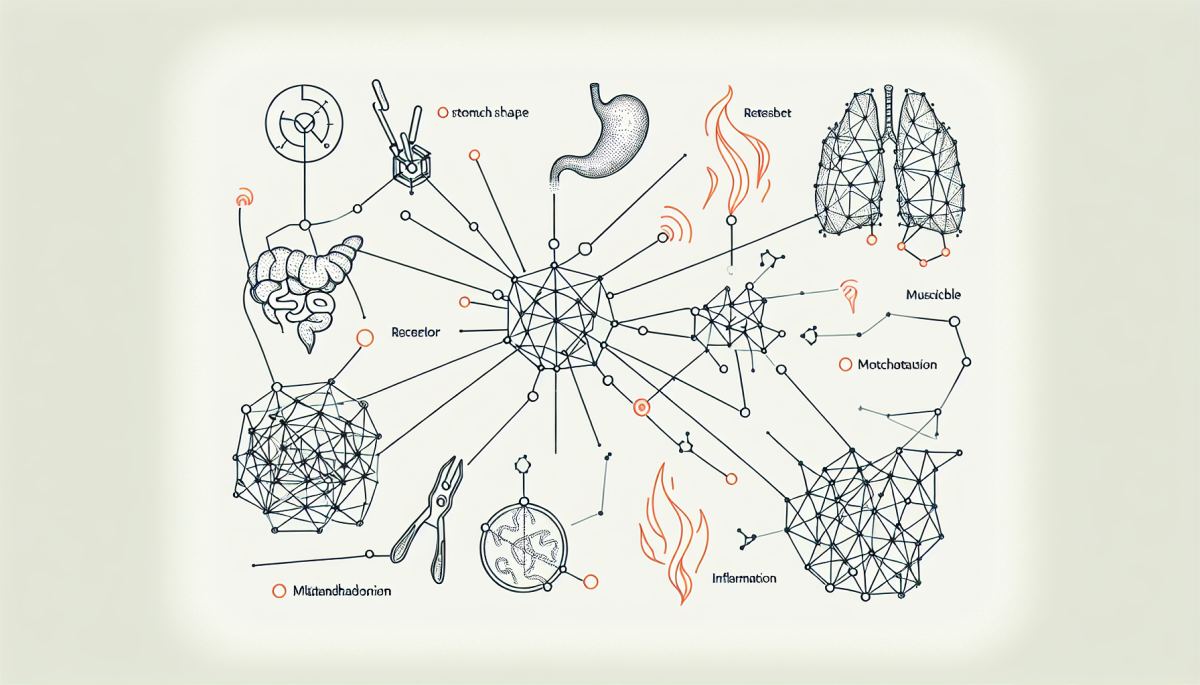
This is not the first time ghrelin biology has surprised researchers. The hormone was only discovered in 1999 by Masayasu Kojima and colleagues at Kurume University, and in the two decades since, its functions have turned out to be far more complex than a simple hunger switch. It interacts with growth hormone pathways, influences inflammation, and modulates mitochondrial function, all of which are deeply relevant to how muscle tissue ages and deteriorates.
The challenge with sarcopenia is that it is not driven by a single mechanism. Muscle loss in aging involves a slow accumulation of dysfunctions: declining satellite cell activity that limits repair, mitochondrial inefficiency that reduces energy availability, chronic low-grade inflammation that degrades tissue, and hormonal shifts that alter the anabolic signals muscles depend on. Most therapeutic attempts have targeted only one of these threads, which may explain why no drug has yet been approved specifically for sarcopenia despite decades of research.
The ghrelin receptor pathway is interesting precisely because it appears to sit at an intersection of several of these mechanisms. Suppressing GHSR may not just tweak one variable but nudge a broader network. If the receptor influences both inflammatory signaling and mitochondrial function simultaneously, blocking it could produce compounding benefits that single-target approaches miss. That kind of systems-level leverage is exactly what researchers have been searching for.
It is also worth noting the metabolic irony embedded in this research. Ghrelin drives hunger, and older adults with sarcopenia are often caught in a difficult bind: they need more protein and calories to preserve muscle, but appetite frequently declines with age, a phenomenon sometimes called the "anorexia of aging." If GHSR suppression improves muscle function without further blunting appetite, or if the intervention can be targeted specifically to muscle tissue, it could sidestep one of the thorniest paradoxes in geriatric nutrition.
The most significant systems-level consequence of this line of research may not be the drug that eventually emerges from it, but what it signals about the future of aging biology as a field. For years, sarcopenia was treated as an inevitable background condition of growing old, something to manage rather than reverse. Research like this, which identifies specific molecular targets with measurable functional outcomes in animal models, is part of a broader shift toward treating aging itself as a modifiable process.
That shift carries its own feedback dynamics. As more mechanistic targets are identified, investment in aging biology accelerates, which produces more targets, which attracts more capital. The pipeline for geroscience interventions, once nearly empty, is now filling with candidates ranging from senolytics to NAD+ precursors to, potentially, GHSR modulators. The question is whether clinical translation can keep pace, given that mouse models of aging have a notoriously uneven record of predicting human outcomes.
For now, the ghrelin receptor findings remain in the preclinical stage, and the road from improved muscle function in aged mice to an approved therapy for older humans is long and uncertain. But the underlying logic is compelling enough that it will be difficult to ignore. Aging populations across the developed world are growing faster than the systems designed to support them, and a pharmacological tool that could preserve physical function and independence even modestly would have consequences that ripple far beyond the clinic.
The real test will come when researchers begin to understand not just whether GHSR suppression works, but why it works well enough in aged tissue to matter, and whether that mechanism holds when the mouse becomes a person.
References
- Kojima et al. (1999) — Ghrelin is a growth-hormone-releasing acylated peptide from stomach
- Cruz-Jentoft et al. (2019) — Sarcopenia: revised European consensus on definition and diagnosis
- Cholesterol et al. (2021) — Ghrelin and skeletal muscle: a review of the literature
- Morley et al. (2010) — Anorexia of aging: a key component in the pathogenesis of both sarcopenia and cachexia



Discussion (0)
Be the first to comment.
Leave a comment