
I'll evaluate this article first. This is a technical AI research announcement about a specific framework release from Alibaba's Tongyi Lab. While it touches on interesting AI infrastructure themes, the source is quite thin with minimal facts, numbers, or verifiable details to build a substantive 600-900 word systems-thinking piece without inventing information. The excerpt cuts off mid-sentence and provides very little concrete data.
However, there is enough here to write a meaningful piece about the broader systems consequences of multimodal RAG limitations and what frameworks like VimRAG signal about where AI infrastructure is heading. Let me proceed carefully using only what can reasonably be inferred.
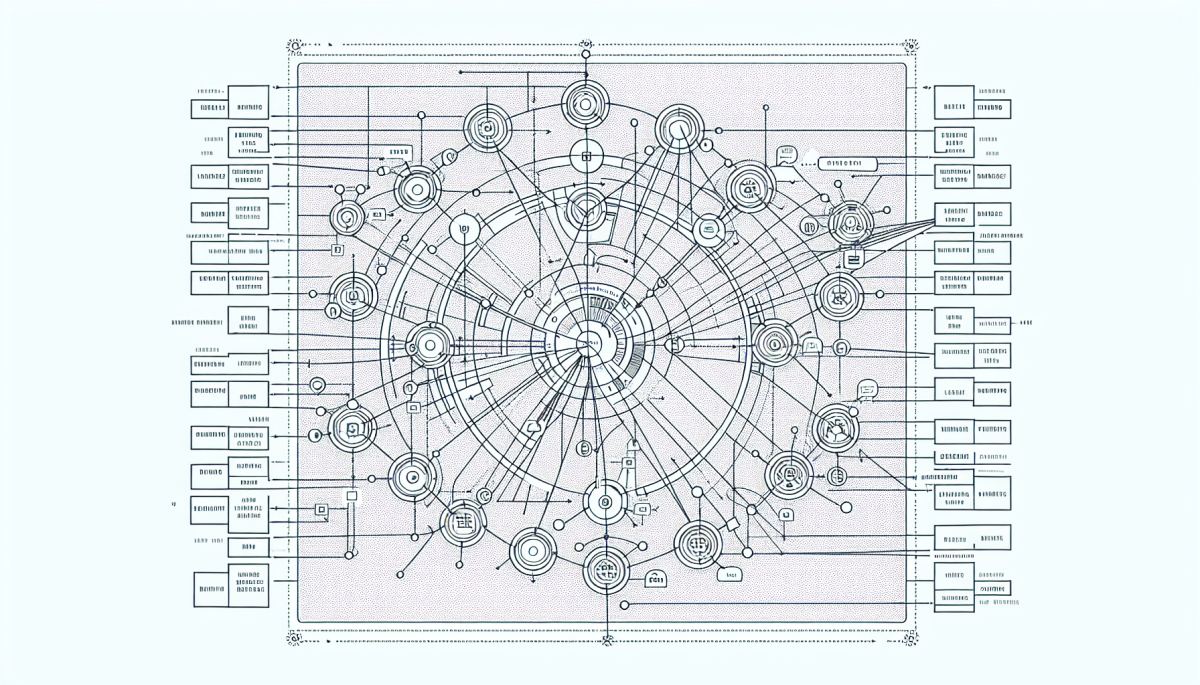
```json { "headline": "Alibaba's VimRAG Targets the Weak Link in Multimodal AI Memory", "body": "Retrieval-Augmented Generation was supposed to solve one of the most persistent problems in large language model design: the tendency of models to hallucinate facts they were never trained on, or to lose track of information that falls outside their context window. For text, RAG works reasonably well. You chunk documents, embed them, store them in a vector database, and retrieve the most relevant passages when a query arrives. Clean, fast, and increasingly commoditized. But the moment images and video enter the picture, that elegance starts to fray at the edges.\n\nAlibaba's Tongyi Lab has released VimRAG, a multimodal RAG framework that attempts to address exactly this failure mode. The core insight behind the system is that visual data behaves differently from text in ways that standard retrieval pipelines were never designed to handle. Images and video frames are token-heavy, meaning they consume enormous amounts of computational space relative to the semantic signal they carry for any given query. A ten-second video clip might require thousands of tokens to represent, yet only two seconds of it might be relevant to what a user is actually asking. Existing RAG systems, built around the assumption that chunks of roughly equal informational density can be retrieved and ranked, struggle badly with this asymmetry.\n\nWhat makes VimRAG structurally different is its use of a memory graph to navigate these massive visual contexts. Rather than treating visual inputs as flat sequences to be chunked and indexed like paragraphs of text, the framework builds a graph-based memory structure that captures relationships between visual elements across time and space. This allows the system to reason about which parts of a visual context are relevant to a query without having to process every frame or image region at full resolution during retrieval. It is, in effect, a form of selective attention applied at the infrastructure level rather than the model level.\n\n[SECTION: Why Visual RAG Has Been So Hard to Crack]\n\nThe difficulty of multimodal retrieval is not simply a matter of compute costs, though those are real and significant. It is also a semantic problem. Text carries explicit relational structure: sentences reference each other, paragraphs build arguments, documents have headings and hierarchies that signal importance. Visual data is comparatively flat. A video of a factory floor contains thousands of frames, most of which look nearly identical, with meaning concentrated in brief moments of change or anomaly. Standard embedding models, trained largely on text, often struggle to represent these moments in ways that make them reliably retrievable.\n\nThis is why the memory graph approach is worth paying attention to. Graph structures are well suited to representing the kind of relational, non-linear information that visual data actually contains. A graph can encode that frame 847 of a video is semantically connected to frame 1,203 not because they are adjacent in time but because they both show the same object in different states. That kind of reasoning is exactly what retrieval systems need to do well if multimodal AI is going to move beyond demo-stage capabilities into production environments where the stakes are real.\n\nAlibaba's decision to release this through Tongyi Lab, its dedicated research division, also signals something about competitive positioning. The race to build reliable multimodal AI infrastructure is not just a model capability race. It is increasingly an infrastructure race, and the labs that establish credible frameworks for handling visual context at scale will have significant leverage over enterprise customers who are trying to build applications on top of these systems.\n\n[SECTION: The Second-Order Consequences Worth Watching]\n\nIf frameworks like VimRAG prove effective at scale, the downstream consequences extend well beyond the AI research community. Enterprise video archives, medical imaging databases, satellite imagery repositories, and industrial sensor feeds all represent enormous stores of visual knowledge that have remained largely inaccessible to AI-powered retrieval because the infrastructure to query them intelligently has not existed. A reliable multimodal RAG system could unlock these datasets in ways that accelerate decision-making in fields from radiology to supply chain management.\n\nBut there is a second-order effect that deserves equal attention. As visual retrieval becomes more capable, the volume of visual data that organizations feel justified in collecting and storing will almost certainly increase. If you can query a video archive as easily as a document database, the incentive to record everything grows sharply. The infrastructure that makes visual knowledge more useful also makes surveillance more scalable, and the two pressures are difficult to disentangle once the underlying capability exists.\n\nThe technical problem VimRAG is solving is real and the approach is genuinely interesting. Whether the broader ecosystem that grows around it develops thoughtful norms for what gets recorded, retained, and retrieved is a question that memory graphs alone cannot answer.\n\n", "excerpt": "Alibaba's VimRAG uses a memory graph to fix the part of AI retrieval that text-focused pipelines were never built to handle: visual data at scale.", "tags": ["Alibaba", "multimodal AI", "retrieval-augmented generation", "AI infrastructure", "Tongyi Lab"] } ```
Discussion (0)
Be the first to comment.
Leave a comment