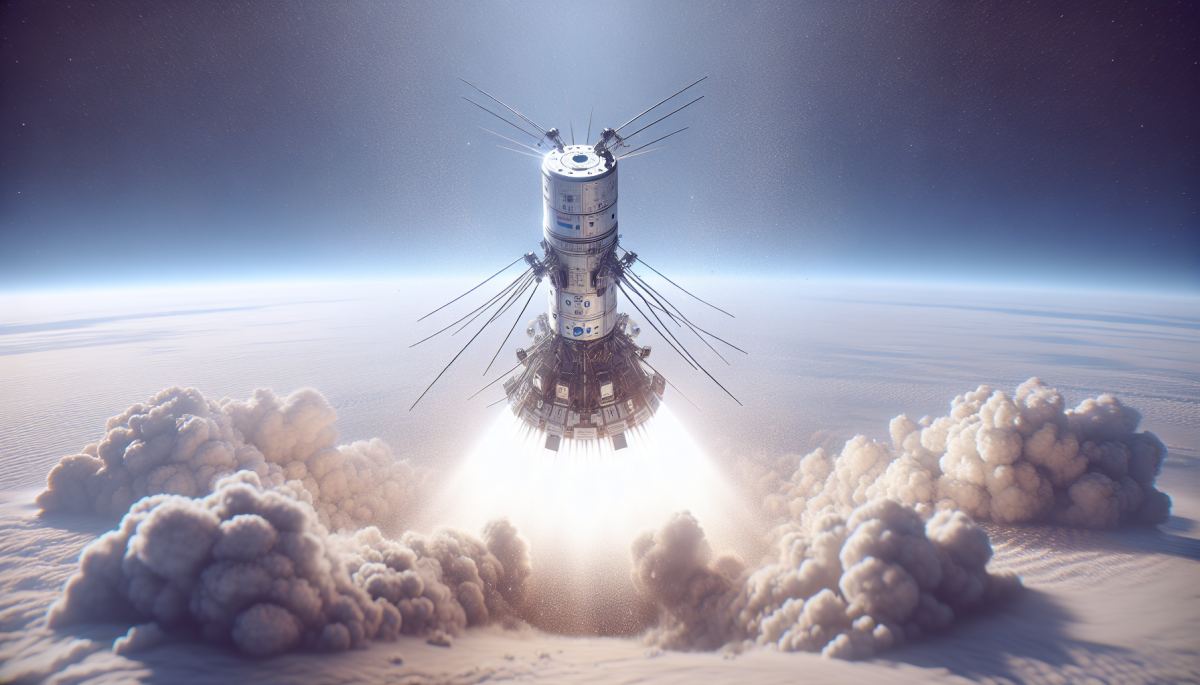
The math is unforgiving. When the Orion capsule carrying four astronauts returns from lunar orbit sometime in 2026, it will slam into Earth's atmosphere at roughly 25,000 miles per hour, generating heat on its heat shield that exceeds 5,000 degrees Fahrenheit. The entire reentry sequence lasts about 14 minutes. If the capsule enters at the wrong angle, even by a fraction of a degree, the crew does not survive. As NASA flight director Judd Frieling put it with unusual candor: "Let's not beat around the bush — we have to hit that angle correctly."
That kind of directness is rare in the careful, acronym-heavy language of spaceflight communications, and it signals something important. Artemis II is not a routine mission. It will be the first time humans have traveled to the vicinity of the Moon since Apollo 17 in 1972, and the reentry profile NASA is planning is more complex than anything the Apollo program attempted. Orion will use a technique called skip reentry, where the capsule briefly dips into the upper atmosphere, bounces back out like a stone skipping across water, and then makes its final descent. This approach bleeds off speed more gradually and gives mission controllers more flexibility in where the capsule splashes down, but it also means the vehicle must execute two precise atmospheric entries instead of one.
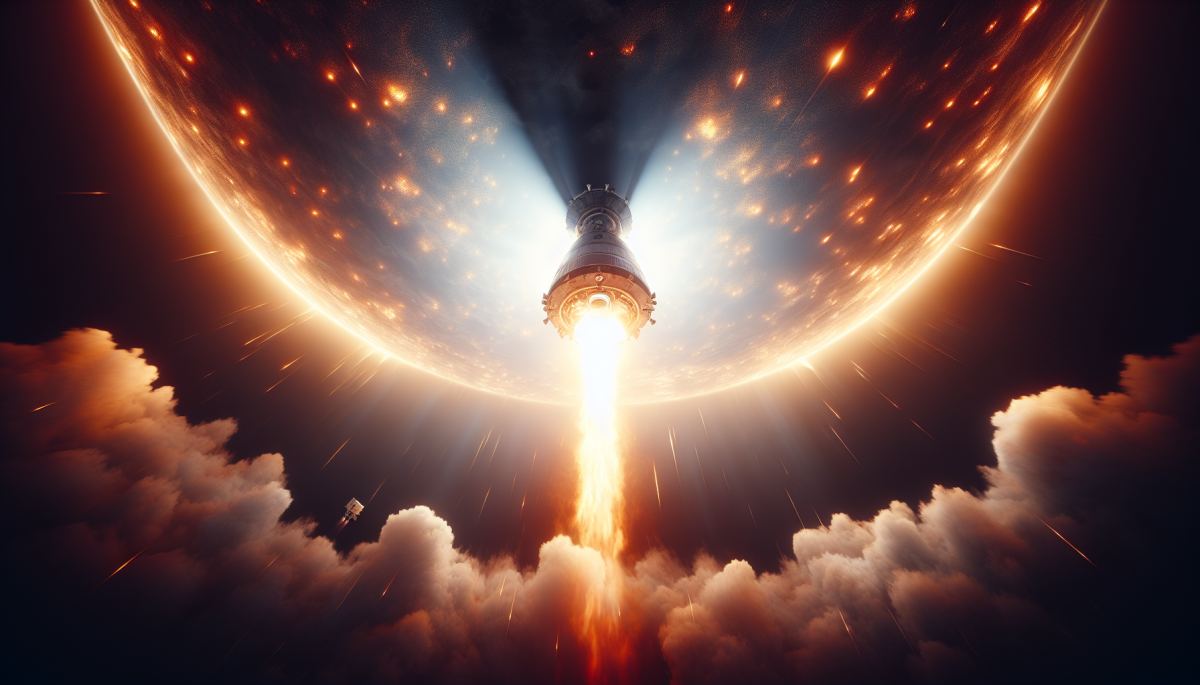
The skip reentry technique was tested without crew during Artemis I in late 2022, when an uncrewed Orion completed a 25-day mission around the Moon and returned safely to the Pacific Ocean. That flight gave engineers real-world data on how the heat shield performed, and some of what they found was unexpected. Post-flight analysis revealed that the ablative material on the heat shield eroded in patterns that differed from model predictions, prompting an ongoing investigation that NASA has described as a priority item ahead of crewing the vehicle. The agency has been careful not to characterize this as a safety failure, but the fact that reality diverged from simulation on a component whose entire purpose is to keep astronauts alive during the most violent phase of flight is not a detail that fades quietly into the background.
Heat shield performance is not the only variable in play. The 14-minute reentry window compresses an enormous number of interdependent systems into a sequence where there is no opportunity to pause and troubleshoot. Parachute deployment, guidance navigation, communication blackouts caused by plasma buildup around the capsule, and the precise timing of the skip maneuver all have to work in coordination. A delay or anomaly in any one of them cascades into the others. This is the kind of tightly coupled, high-consequence system that the sociologist Charles Perrow famously argued was prone to what he called "normal accidents" — failures that emerge not from single points of breakdown but from the interaction of small deviations across a complex chain.
The pressure on Artemis II extends well beyond the mission itself. NASA's entire Artemis architecture, which is designed to return Americans to the lunar surface and eventually support a sustained human presence there, depends on Orion as its crew vehicle. There is no backup. The Space Launch System rocket that carries Orion has already drawn criticism for its cost, with the Government Accountability Office and independent analysts repeatedly flagging that the program runs at roughly $4 billion per launch. If Artemis II encounters serious problems, the political and budgetary consequences would ripple through the entire program at a moment when commercial competitors like SpaceX are advancing rapidly and when NASA is already navigating significant budget uncertainty under shifting federal priorities.
There is also a second-order effect that rarely gets discussed in mission coverage: the psychological and institutional weight that a crewed lunar return places on the engineers and flight controllers who have spent years working toward it. The Artemis I data anomalies on the heat shield are being worked through by a workforce that knows the next flight carries people. That kind of pressure can sharpen focus, but it can also introduce the subtle biases toward optimism that have preceded some of spaceflight's worst moments. The Columbia Accident Investigation Board identified "normalization of deviance" as a root cause of that disaster, a process where repeated exposure to anomalies without immediate consequence gradually makes those anomalies feel acceptable.
Fourteen minutes is not a long time. But the decisions, tradeoffs, and institutional dynamics that will determine whether those 14 minutes go well are already years in the making, and the trajectory of human spaceflight for the next decade may hinge on how they unfold.
References
- NASA (2023) — Artemis I Mission Overview
- NASA Office of Inspector General (2023) — NASA's Management of the Orion Multi-Purpose Crew Vehicle Program
- GAO (2023) — NASA Artemis: Actions Needed to Improve Transparency and Accountability
- Perrow, C. (1984) — Normal Accidents: Living with High-Risk Technologies
- Columbia Accident Investigation Board (2003) — CAIB Report Volume 1
Discussion (0)
Be the first to comment.
Leave a comment