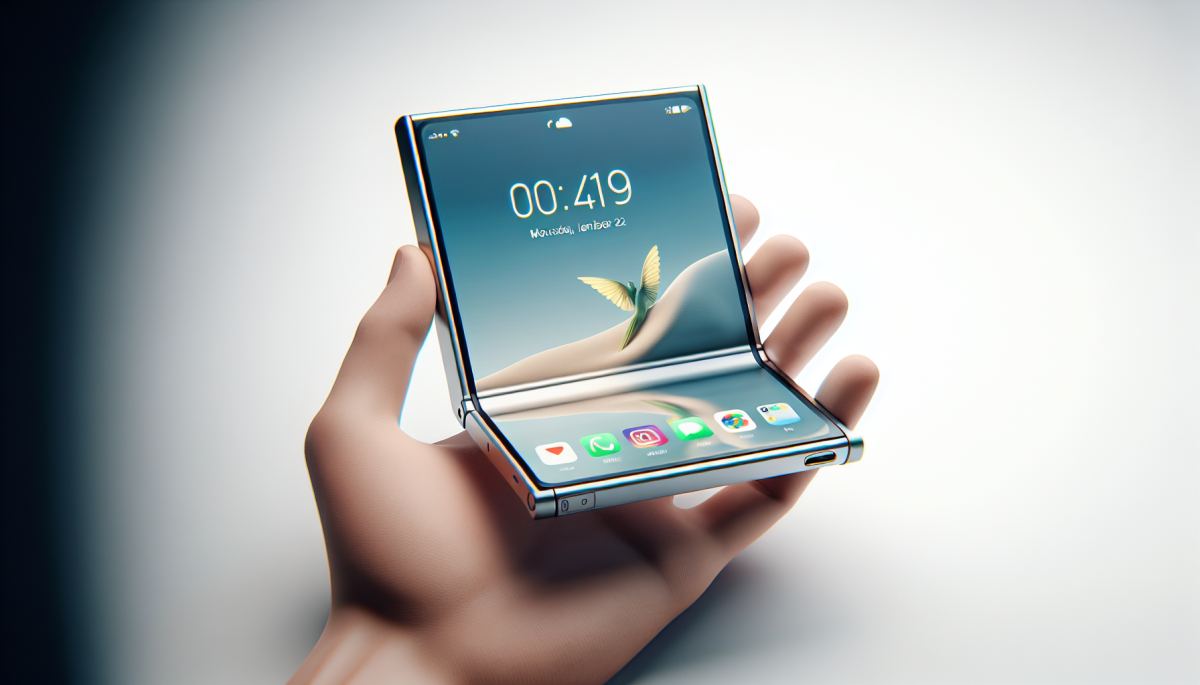
Dummy units don't lie, at least not entirely. When leaker and journalist Sonny Dickson published photos of what he claims is a pre-production dummy of Apple's long-rumored foldable iPhone, the images immediately stood out for one reason: the device looks unusually wide. Shared alongside dummy units of the iPhone 18 Pro and 18 Pro Max, the so-called iPhone Fold appears to have a form factor that breaks from the tall, narrow proportions most people associate with an iPhone. That's not a small design choice. It's a signal about how Apple is thinking about the foldable category, and what kind of user experience it's betting on.
Dummy units, for the uninitiated, are non-functional plastic or metal replicas that case manufacturers and supply chain partners use to design accessories before a phone officially launches. They're often accurate in terms of dimensions and general shape, even if they don't reflect final materials or exact camera placement. Dickson has a credible track record in this space, which gives the images more weight than a typical anonymous leak. But the timing of the photos is almost as interesting as the photos themselves, arriving just as separate reports suggest Apple may be pushing the iPhone Fold's release date back.
The width of the device in the dummy images points toward a book-style foldable, similar in concept to Samsung's Galaxy Z Fold series, rather than a clamshell design like the Motorola Razr or Samsung's Galaxy Z Flip. A wider unfolded display gives users something closer to a small tablet experience, which is presumably the point. Apple has watched the foldable market develop for years without entering it, and if the company is finally moving, it appears to be swinging for a premium, productivity-oriented use case rather than a compact novelty.
That strategic choice carries real consequences for the supply chain. A larger, wider foldable screen demands more from display suppliers, hinge manufacturers, and battery engineers simultaneously. Apple's reported display partner for the device is Samsung Display, which already produces foldable OLED panels for its own parent company's phones. Sourcing from a direct competitor is a tension Apple has long tried to reduce, and it adds a layer of complexity to the production timeline that doesn't exist for a standard iPhone.
This may help explain the delay rumors. Reports circulating alongside the Dickson leak suggest Apple has run into yield or engineering challenges significant enough to push the launch window. Apple typically announces new iPhones in September. If the Fold misses that window, it would likely slip to early 2026 at the earliest, which would hand Samsung and Google another holiday season to consolidate their positions in the foldable premium segment.
The deeper systems consequence here isn't just about one phone being late. Apple entering the foldable market, even with a delay, restructures incentives across the entire industry. Accessory makers, mobile carriers, and app developers have largely treated foldables as a niche category because iPhone users, who represent a disproportionate share of mobile app revenue, haven't had a foldable option. The moment Apple ships one, that calculus changes almost overnight.
Developers who have deprioritized adaptive layouts optimized for foldable screens will face pressure to update their apps. Carriers will need to build marketing infrastructure around a new iPhone form factor. And perhaps most significantly, Apple's entry will likely accelerate price competition among existing foldable makers, since the halo effect of Apple's brand tends to expand the perceived legitimacy of whatever category it enters.
There's also a feedback loop worth watching inside Apple itself. The iPhone Fold, if it succeeds, would create internal pressure on the iPad team. A wide, book-style foldable iPhone that opens to near-tablet dimensions starts to answer some of the same questions a small iPad answers. Apple has historically managed that tension carefully, but a foldable iPhone priced at a premium could cannibalize entry-level iPad sales in ways that a standard iPhone never could.
For now, the dummy unit photos offer a rare, tangible glimpse into a product Apple has never officially acknowledged. Whether the final device matches what Dickson photographed, and whether it arrives before the end of 2025, remains genuinely uncertain. But the shape of the thing, wide and ambitious, says something about where Apple thinks the next chapter of the smartphone is headed, even if it's not quite ready to turn the page.
Discussion (0)
Be the first to comment.
Leave a comment