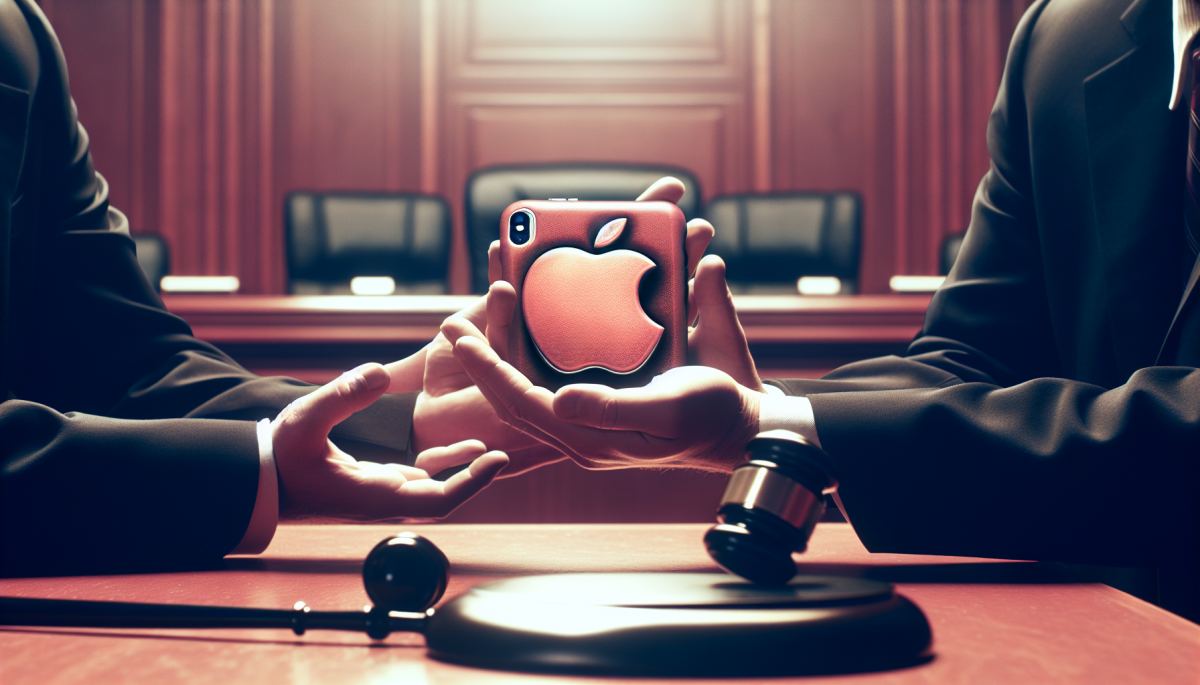
Apple's decision to seek Supreme Court review of its ongoing legal battle with Epic Games is more than a corporate dispute over payment links. It is a high-stakes test of whether a private platform can function as a toll booth on the internet economy, and the answer will ripple far beyond the two companies involved.
The conflict traces back to 2020, when Epic Games deliberately violated Apple's App Store guidelines by introducing a direct payment option inside Fortnite, bypassing Apple's standard 15 to 30 percent commission. Apple removed Fortnite from the App Store. Epic sued. What followed was one of the most closely watched antitrust cases in Silicon Valley history, producing a ruling that was, depending on your perspective, either a partial victory for Apple or a slow-moving earthquake beneath its business model.
The Ninth Circuit Court of Appeals upheld a lower court injunction requiring Apple to allow developers to include links or buttons directing users to external payment options. Apple cannot, under that ruling, prohibit developers from telling their own customers that cheaper prices exist elsewhere. That sounds modest. For Apple, it is anything but.
Apple's App Store generated an estimated $24 billion in revenue in 2023, according to analysis from Morgan Stanley, with the commission structure serving as the primary engine. The injunction, if it holds, does not eliminate Apple's commission outright, but it introduces friction into the system that Apple has spent fifteen years perfecting. Once users know they can pay less by going directly to a developer's website, the psychological and behavioral pressure on Apple's pricing power becomes structural, not incidental.
This is why Apple is going back to the Supreme Court. The company already attempted to pause enforcement of the injunction and lost that bid. Now it is betting that the nation's highest court will take up the question of whether the lower courts correctly applied antitrust law, specifically whether Apple's conduct constitutes an anticompetitive restraint under California's Unfair Competition Law. Apple's argument, consistent throughout this litigation, is that its closed ecosystem is a feature, not a bug, one that protects consumers from fraud and malware and justifies the premium it charges for access.
That argument has found some sympathy in courts. Judge Yvonne Gonzalez Rogers, who presided over the original trial, largely sided with Apple on federal antitrust claims, finding that Epic had not proven Apple held an illegal monopoly in a properly defined market. But she issued the anti-steering injunction anyway, under state law. The Ninth Circuit affirmed. Apple's repeated attempts to escape that injunction reveal just how seriously the company views even a partial opening of its payment walls.
The systems-level consequence here extends well beyond gaming or even mobile apps. If the Supreme Court takes the case and rules in Epic's favor, or simply declines to hear it and lets the injunction stand, every major platform that charges transaction fees will face renewed scrutiny. Google's Play Store, Amazon's marketplace, and Spotify's in-app billing disputes with Apple all exist in the legal shadow of this case. Regulators in the European Union have already moved independently, with the Digital Markets Act forcing Apple to allow alternative app stores and payment systems in Europe. A Supreme Court ruling aligned with Epic would effectively import that logic into U.S. law through the back door of state unfair competition statutes.
There is also a developer ecosystem dynamic worth watching. Small developers, who pay a reduced 15 percent commission under Apple's Small Business Program, have less immediate incentive to route users to external payments given the friction involved. But larger developers, the ones generating the bulk of App Store revenue, have every reason to invest in alternative payment infrastructure if the legal environment permits it. The injunction, in other words, does not immediately collapse Apple's revenue model. It begins a slow competitive erosion that compounds over time, which is precisely why Apple is fighting it with such persistence.
The Supreme Court accepts a small fraction of the petitions it receives each year. Apple will need to convince the justices that this case presents a question of federal significance, not merely a dispute about California consumer protection law. That is a difficult threshold. But the fact that Apple keeps trying tells you something important about what the company believes is truly at risk. When a $3 trillion company treats a payment link as an existential threat, the economics underneath deserve serious attention.
Discussion (0)
Be the first to comment.
Leave a comment