
For roughly three hours last week, two versions of axios sat on the npm registry carrying a remote access trojan. The library in question gets downloaded more than 100 million times per week and, according to cloud security firm Wiz, lives inside approximately 80% of cloud and code environments. The attack was not a zero-day exploit or a sophisticated breach of npm's infrastructure. It was simpler and, in some ways, more alarming: someone stole a long-lived access token belonging to axios's lead maintainer and used it to publish poisoned releases as if they were the real thing.
The malicious versions targeted macOS, Windows, and Linux, meaning no major platform was out of scope. They were pulled from the registry in about three hours, but in the world of automated dependency resolution, three hours is more than enough time for the compromised packages to propagate into thousands of build pipelines, Docker images, and CI/CD caches that may not be audited for weeks.
The phrase "long-lived access token" is doing a lot of quiet work in this story. Unlike short-lived credentials that expire after hours or days, long-lived tokens are essentially permanent keys. They are convenient for maintainers who do not want to re-authenticate constantly, but they represent a single point of failure that, once compromised, hands an attacker the full publishing authority of a trusted identity.
This is not a new vulnerability class. The 2021 ua-parser-js incident, the compromise of node-ipc in 2022, and the catastrophic XZ Utils backdoor discovered in 2024 all share a common thread: the open-source supply chain is secured largely by the personal operational security habits of individual maintainers, many of whom are unpaid volunteers managing libraries used by Fortune 500 companies. The incentive structure is badly misaligned. The people bearing the security burden are not the ones capturing the economic value.
npm does offer granular publish tokens and two-factor authentication requirements for high-impact packages, but adoption is inconsistent and enforcement is limited. GitHub's advisory database and the OpenSSF Scorecard project have pushed for stronger defaults, yet the ecosystem moves slowly when changes impose friction on maintainers who are already stretched thin.
The second-order consequences here extend well beyond the organizations that directly downloaded the two malicious versions. Because axios is so deeply embedded in the JavaScript ecosystem, it appears as a transitive dependency in countless other libraries. A developer who never explicitly installed axios may still have pulled it in through three or four layers of indirect dependencies. Automated tools like Dependabot or Renovate can update those transitive dependencies without a human ever reviewing the change.
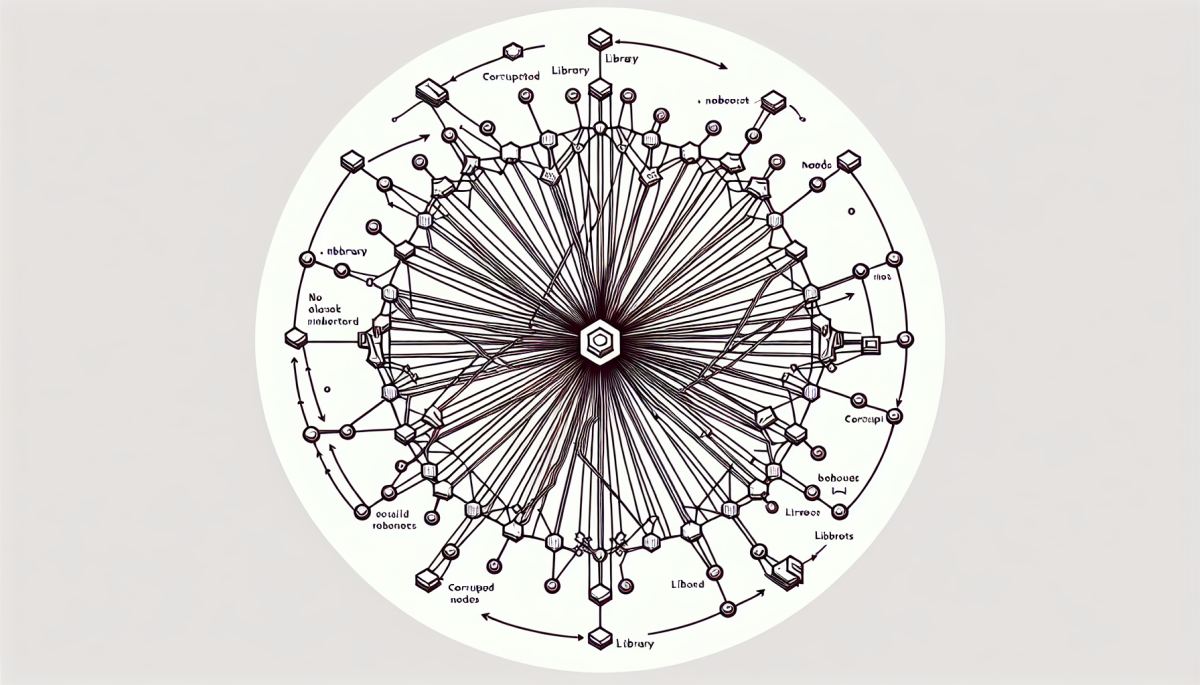
This is the compounding logic of supply chain attacks. The attacker does not need to target your organization. They need to target one trusted node in a graph that connects to your organization, and axios is about as central a node as exists in the JavaScript world. A remote access trojan installed at that level could theoretically persist in containerized workloads, exfiltrate environment variables containing cloud credentials, or establish footholds that survive redeployment if the compromised image is cached and reused.
The three-hour window also deserves scrutiny. Security teams that do not have real-time software composition analysis in their pipelines may have no way of knowing whether a build during that window pulled the malicious version. Retrospective auditing of build logs is possible but rarely practiced at the speed the threat requires. Organizations running air-gapped or internally mirrored registries may actually have been protected by accident, since their mirrors might not have synced the poisoned versions before removal.
What this incident clarifies, more than anything, is that the open-source dependency model has scaled far beyond the trust infrastructure designed to support it. The JavaScript ecosystem in particular has normalized a degree of transitive dependency depth that would be considered reckless in almost any other engineering context. When a single maintainer's stolen token can theoretically touch 80% of cloud environments, the question is no longer whether the supply chain is a critical infrastructure problem. It is whether the industry will treat it like one before the next attack is measured in days rather than hours.
Discussion (0)
Be the first to comment.
Leave a comment