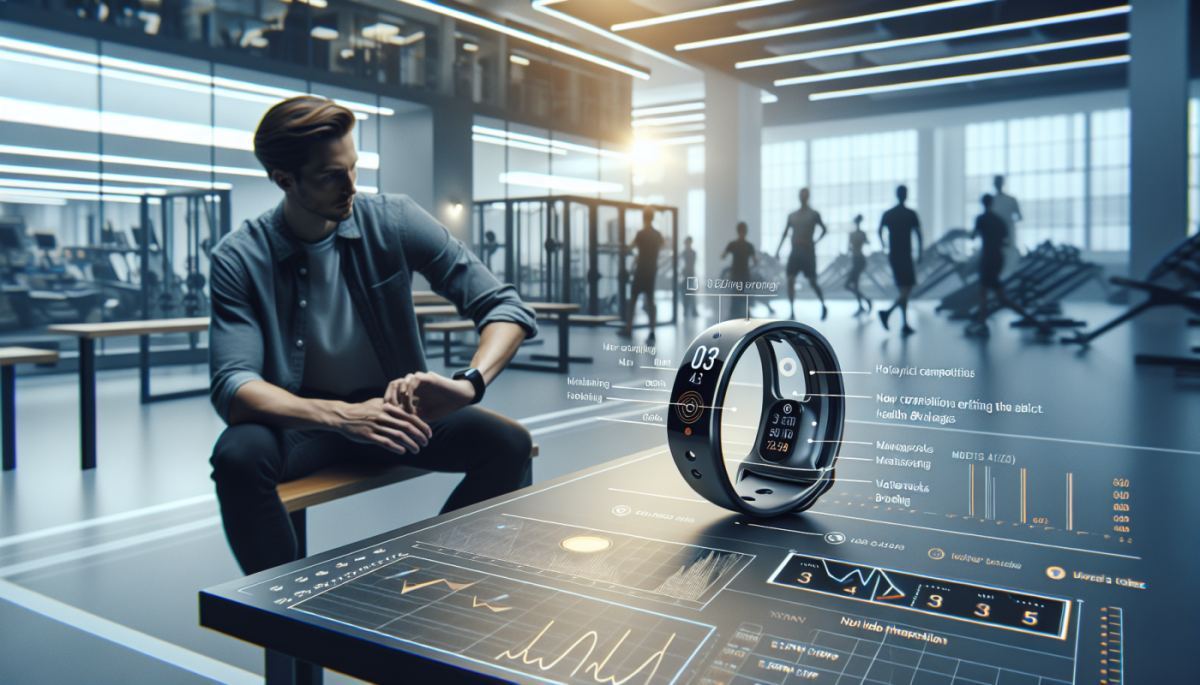
The smart ring market is small, crowded, and increasingly consequential. Ultrahuman, the Bangalore-based health tech company, is doubling down on its American ambitions with the launch of its Ring Pro, stepping directly into territory that Oura has spent years fortifying. The U.S. accounts for roughly 60% of global demand for smart rings, making it the only market that truly matters for any company hoping to scale in this category. The question is whether there is enough room for a serious second player, or whether Oura's head start has already calcified into something closer to a structural monopoly.
Oura's rise has been methodical. The Finnish company launched its third-generation ring in 2021, shed its one-time purchase model in favor of a subscription, and has since built a dataset of sleep, heart rate variability, and readiness scores that is arguably its most defensible asset. By the time most consumers heard of smart rings, Oura was already the default answer. Its partnerships with the NBA, its early pandemic-era research collaborations, and its integration into mainstream wellness culture gave it a kind of cultural legitimacy that hardware specs alone cannot manufacture.

Ultrahuman is not without its own credentials. The company has cultivated a loyal following among biohackers and endurance athletes, and its Ring AIR earned praise for its lightweight design and the depth of its metabolic tracking features. The Ring Pro represents a step up in both ambition and positioning, targeting a U.S. consumer who is increasingly sophisticated about continuous health monitoring but not necessarily locked into any single ecosystem yet.
What makes this competitive dynamic genuinely interesting from a systems perspective is the role that data accumulation plays in determining long-term winners. Oura's subscription model, which drew criticism when it launched, turns out to have been strategically shrewd. Recurring revenue funds continuous software improvements, and every additional user night of sleep data makes Oura's algorithms marginally better at detecting anomalies, predicting illness onset, and personalizing baselines. This is a classic feedback loop: more users generate better models, better models attract more users, and the gap between Oura and its competitors widens not because of any single product decision but because of compounding informational advantage.
Ultrahuman's challenge is not just to build a better ring. It is to interrupt that loop before it becomes self-sustaining. The company has chosen to compete partly on the absence of a mandatory subscription, a positioning choice that appeals to a consumer segment that has grown wary of recurring fees attached to physical hardware. Whether that is enough of a wedge remains genuinely uncertain. Price sensitivity in the premium wellness segment is lower than in consumer electronics broadly, and the buyers most likely to spend on a smart ring are also the buyers most likely to tolerate a monthly fee if the product justifies it.
The deeper consequence of this market dynamic may not be felt by consumers at all, at least not immediately. As smart ring adoption grows, the health data generated by these devices is becoming increasingly attractive to insurers, employers, and pharmaceutical researchers. Oura has already partnered with academic institutions for clinical-grade research. If the U.S. market consolidates around one or two dominant platforms, the entity that controls the largest longitudinal dataset of continuous biometric data will hold extraordinary leverage over how that data gets used, licensed, and eventually monetized.
This is not a hypothetical concern. The Federal Trade Commission has grown more attentive to data broker practices, and the health data space sits in a regulatory gray zone that HIPAA does not fully cover for consumer wearables. A market that looks today like a competition between two wellness gadget companies may, within a decade, look more like a competition between two health data infrastructure providers. The stakes of who wins the smart ring market in 2025 are therefore considerably higher than the hardware itself suggests.
Ultrahuman's push into the U.S. is a rational bet, and the Ring Pro is a credible product entering a real market. But the more consequential race is the one happening in the background, in server farms and research partnerships and regulatory waiting rooms, where the rules governing what these rings actually know about us have not yet been written.
Discussion (0)
Be the first to comment.
Leave a comment