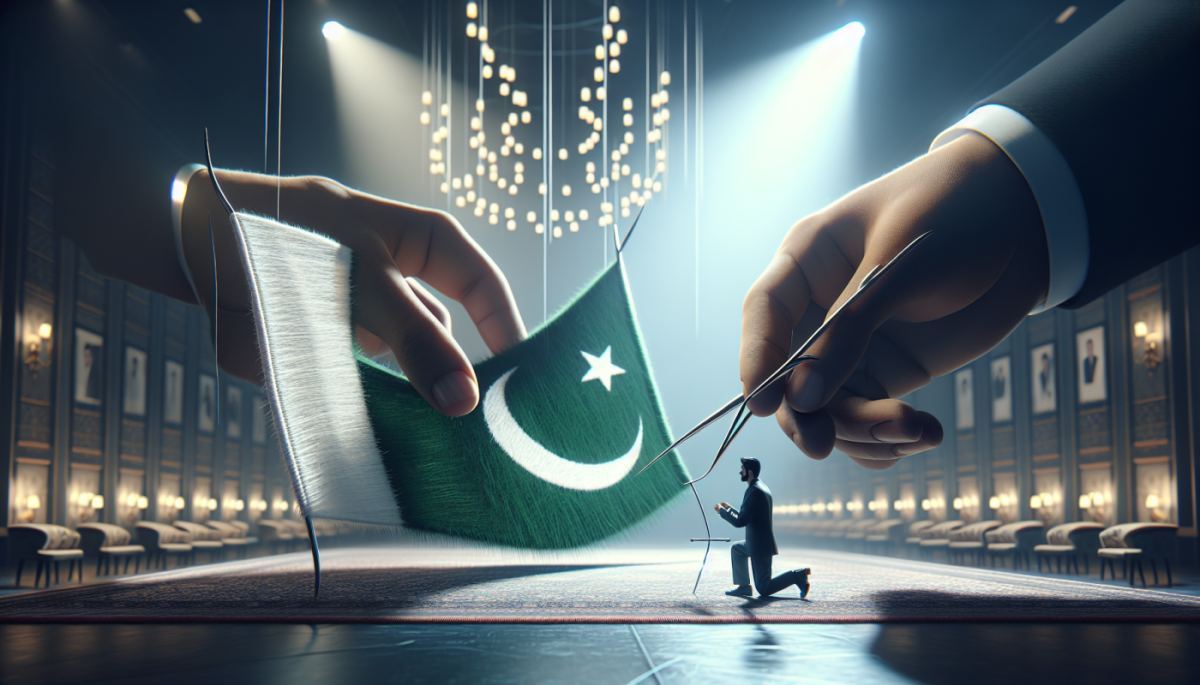
There is a particular kind of diplomatic leverage that only comes from being trusted by two parties who deeply distrust each other. Pakistan, under Army Chief General Asim Munir, appears to be cultivating exactly that kind of leverage as tensions between Washington and Tehran reach another inflection point. The country that has long been described as a troubled ally, a double-dealer, or simply a basket case of competing loyalties is now positioning itself as the indispensable go-between in one of the world's most combustible standoffs.
The logic is not as strange as it might first appear. Pakistan shares a 900-kilometer border with Iran, a relationship built on geographic necessity, Shia-Sunni complexity, and decades of occasionally hostile but ultimately pragmatic coexistence. At the same time, Islamabad has a long, transactional, and currently warming relationship with Washington, one that Munir has worked deliberately to reinforce since taking command of the Pakistani military in November 2022. His reported personal rapport with Donald Trump, whose administration has returned to a posture of maximum pressure on Iran, gives him something rare: a direct line to both camps at a moment when direct lines between those camps simply do not exist.

Mediation is never purely altruistic, and Pakistan's motivations here deserve scrutiny. The country is in the middle of a grinding economic recovery, heavily dependent on IMF support and Gulf financing. A wider Iran-US conflict would be catastrophic for regional stability, energy prices, and the flow of Pakistani laborers through Gulf states, a remittance lifeline worth over $27 billion annually according to the World Bank. Preventing escalation is not just good diplomacy for Islamabad; it is economic self-preservation.
Munir also understands that visibility matters. Pakistan has spent years being sidelined in major diplomatic conversations, overshadowed by India's growing strategic partnerships with the West and squeezed by China's deepening footprint in its own backyard. Inserting Pakistan into the Iran-US channel, even as a messenger rather than a principal, restores some of that lost relevance. It signals to Washington that Pakistan is a net contributor to regional stability rather than a source of it. That reputational shift has real downstream value when it comes to debt relief negotiations, military aid conversations, and the broader question of how the U.S. positions itself relative to Islamabad versus New Delhi.
The risks, however, are substantial. Iran is not a monolithic actor. The Revolutionary Guards, the Supreme Leader's office, and the foreign ministry often operate with competing agendas, and a message delivered through Islamabad may land differently depending on which faction receives it. Pakistan has also been burned before by overextending its mediator role, most notably in Afghanistan, where its influence over the Taliban proved far more limited than it had advertised to Western partners.
The more interesting systemic question is what happens if this mediation effort actually works, even partially. A Pakistan that successfully helps de-escalate an Iran-US crisis would emerge with a form of diplomatic capital it has not held in decades. That capital could be deployed in conversations about Kashmir, about the terms of its IMF program, or about the future of U.S. military presence and intelligence cooperation in the region. Success breeds demand, and a Pakistan seen as a reliable back-channel would find itself fielding requests from multiple directions.
But there is a feedback loop worth watching on the other side of that coin. If Munir's mediation role becomes publicly prominent and is perceived in Tehran as Pakistan tilting toward Washington, it could strain the Iran-Pakistan relationship at precisely the moment that relationship needs to function as the channel's foundation. Iran has not forgotten that Pakistan, under pressure, has historically bent toward American preferences. Trust, in diplomacy, is the infrastructure everything else runs on, and it is fragile.
What is unfolding is less a story about one general's ambitions and more a story about the structural incentives that push middle powers toward mediation in an era of great-power confrontation. When the principals cannot talk, someone has to carry the message. The question Pakistan is quietly answering is whether it can be that someone without becoming a casualty of the conversation itself.
If Munir threads this needle, the more consequential outcome may not be any specific agreement between Washington and Tehran, but rather the precedent it sets for how Pakistan defines its role in a world that is rapidly reorganizing around rival blocs.
Discussion (0)
Be the first to comment.
Leave a comment