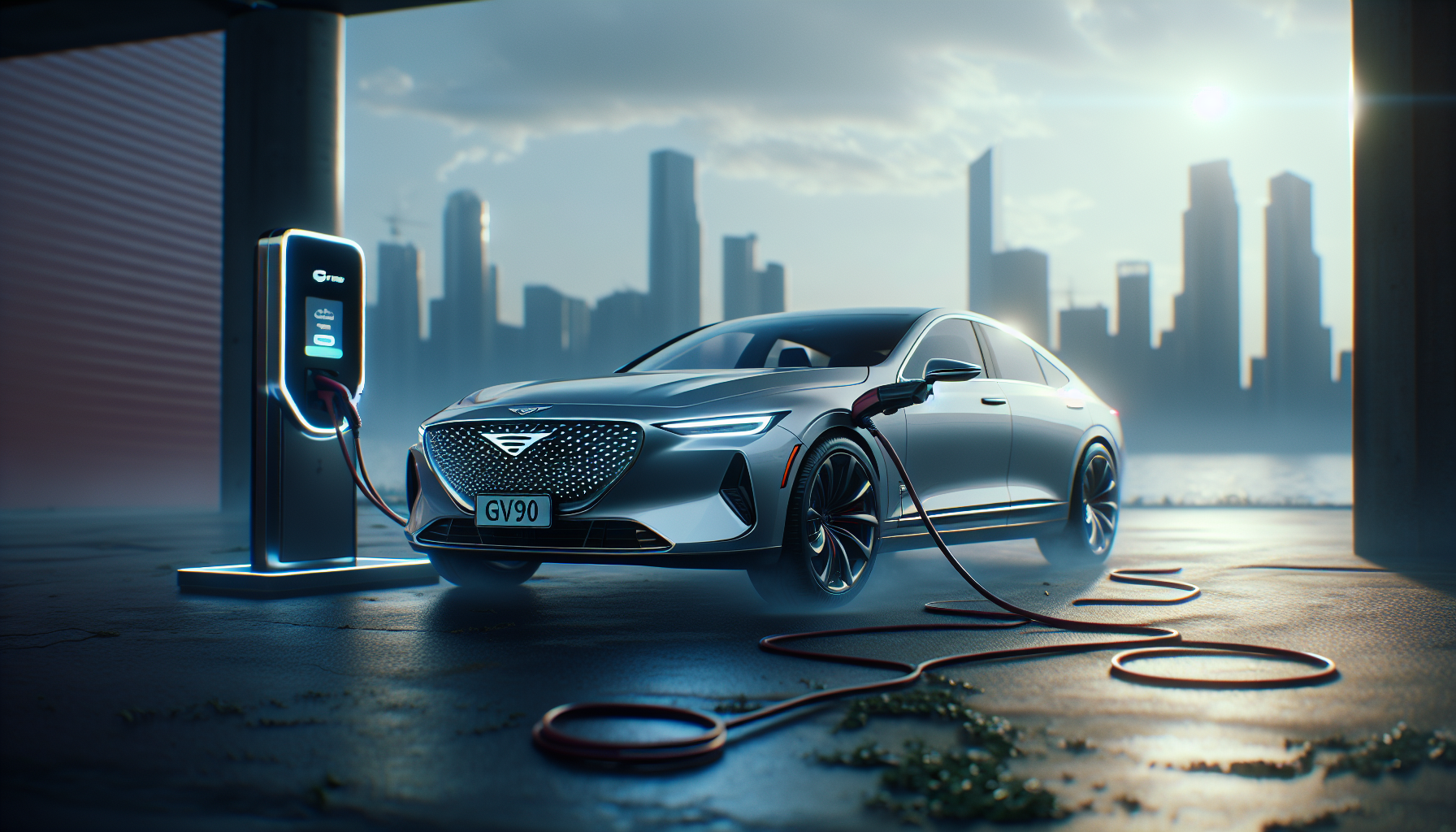
A single photograph can say more about an industry's direction than a dozen press releases. When the Genesis GV90 was recently spotted charging alongside a Hyundai IONIQ 5, the image did something no official teaser had managed: it gave the world an honest sense of scale. The GV90 dwarfed its stablemate, and in doing so, it quietly announced that Genesis is not merely building another electric SUV. It is staking a claim at the very top of the luxury EV segment, where size, presence, and perceived prestige are still the primary currencies.
The GV90 is expected to be the largest and most premium electric vehicle Genesis has produced to date. That framing matters. Genesis, Hyundai's luxury arm, has spent the better part of a decade trying to establish itself as a credible alternative to German incumbents like BMW, Mercedes-Benz, and Audi. The IONIQ 5, which shares Hyundai's E-GMP platform, helped prove the group could build compelling electric vehicles. But the GV90 represents something different in ambition: a flagship statement, the kind of vehicle brands use to define what they believe luxury should feel like in the electric era.
There is a specific commercial logic behind building big. Flagship SUVs carry the highest margins in any automaker's lineup, and in the luxury segment, physical size still functions as a proxy for status. Cadillac understood this with the Escalade IQ. Mercedes leaned into it with the EQS SUV. Rivian built its entire brand identity around commanding proportions. Genesis, by going large with the GV90, is following a well-worn path, but the timing and competitive pressure make the move more urgent than it might appear.
The global luxury EV market is consolidating faster than analysts predicted even two years ago. Early movers like Tesla captured enormous mindshare, but legacy luxury brands are now fighting back with vehicles that combine heritage credibility with genuine electric capability. The window for a brand like Genesis to carve out a durable position at the top of that market is narrowing. A vehicle the size and presence of the GV90, arriving with the full backing of Hyundai Motor Group's engineering and manufacturing scale, could either cement Genesis as a serious player or expose the limits of its brand equity if the execution falls short.
The charging station photograph, almost certainly captured by an enthusiast or spy photographer rather than released by the company, also tells a subtler story about the EV infrastructure moment we are living through. Seeing a massive, unreleased flagship SUV plugged into a public charger next to a mainstream EV is a reminder that all of these vehicles, regardless of price point or prestige, are still dependent on the same fragile, unevenly distributed charging network. A $100,000-plus Genesis GV90 owner and an IONIQ 5 driver are, at least in that moment, equals in their dependence on a system that remains incomplete.
The arrival of vehicles like the GV90 carries consequences that extend beyond Genesis's own balance sheet. As luxury automakers push into larger electric SUVs, they are placing enormous bets on battery supply chains that are already under strain. Bigger vehicles require bigger battery packs, which means more lithium, more nickel, and more cobalt. The competitive pressure to build flagship EVs at scale could accelerate demand for critical minerals in ways that stress both pricing and geopolitical supply relationships, particularly as the United States and European Union continue efforts to reduce dependence on Chinese battery supply chains.
There is also a feedback loop worth noting inside Hyundai Motor Group itself. The GV90 will almost certainly share platform DNA and components with future Hyundai and Kia models, meaning the engineering investment Genesis makes at the flagship level tends to trickle down across the group's broader lineup over time. What looks like a niche luxury play today often becomes the foundation for mass-market vehicles three to five years later.
The photograph of the GV90 charging next to an IONIQ 5 will likely be forgotten by the time the vehicle officially debuts. But it captured something real: a brand testing the boundaries of what it can become, parked next to evidence of how far it has already come. Whether the market rewards that ambition depends less on the GV90's size and more on whether Genesis has built something that justifies the premium it will inevitably ask buyers to pay.
If it has, the German brands will need to pay very close attention.


Discussion (0)
Be the first to comment.
Leave a comment