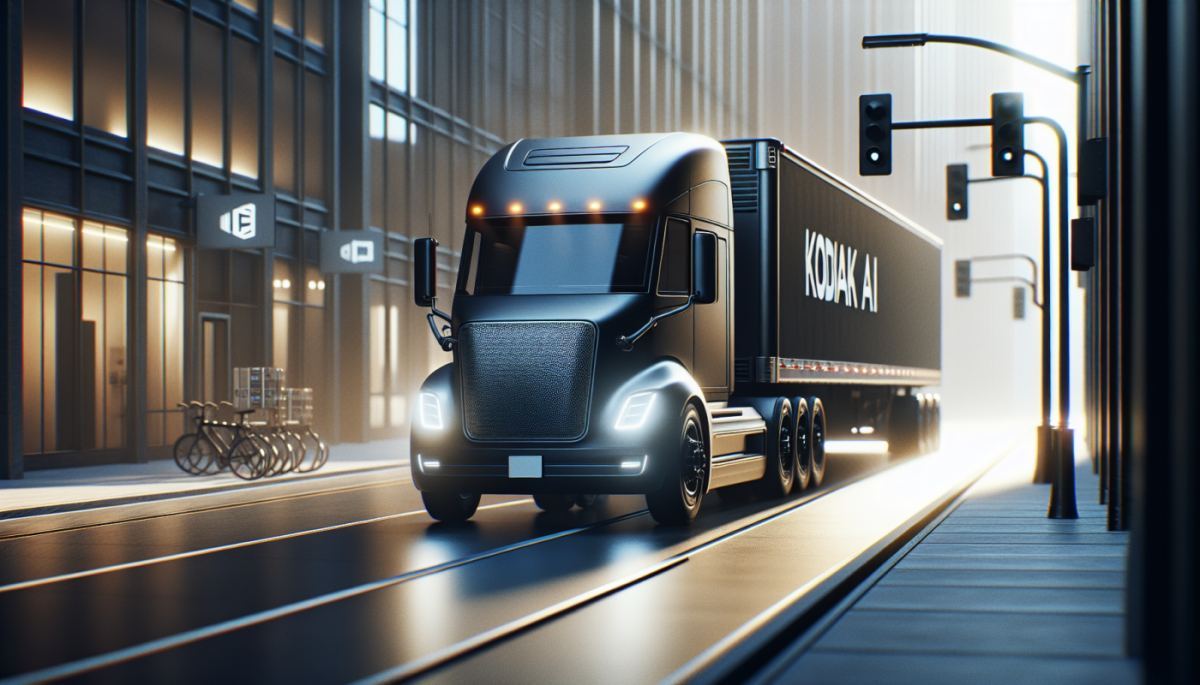
The autonomous trucking industry has spent years solving the wrong half of its problem. Teaching a truck to drive itself, it turns out, is only the beginning. The deeper challenge, and the one that will ultimately determine which companies survive, is building the operational infrastructure around a driverless vehicle once it no longer has a human sitting in the cab to handle everything that goes wrong on a 1,500-mile haul.
That is the argument Kodiak AI's CEO has been making as the company sets its sights on a fully driverless long-haul freight operation by the end of 2026. It is a timeline that puts Kodiak in direct competition with Aurora, which has already announced plans to deploy hundreds of autonomous big rigs, and Waabi, which is simultaneously expanding into robotaxis. The race is accelerating, and the stakes are no longer just technological. They are logistical, commercial, and deeply systemic.
When a human truck driver encounters a blown tire outside Amarillo at 2 a.m., they call dispatch, pull over safely, and wait for roadside assistance. They can describe what they see, negotiate with a tow operator, and make judgment calls about whether the load is secure. A driverless truck cannot do any of that without a parallel support system that has been deliberately engineered to replace every one of those human functions. That system, which the industry sometimes calls "driverless operations" or "remote support infrastructure," is expensive, complex, and almost entirely invisible to outside observers focused on the sensor stacks and AI models.
This is the second-order problem that Kodiak's leadership is flagging, and it deserves more attention than it typically gets. Building a truck that can navigate a highway is a software and hardware challenge. Building the network of transfer hubs, remote operators, maintenance crews, and real-time monitoring systems that allow that truck to function commercially without a driver is an operational and capital challenge of an entirely different order. Companies that crack the first problem but underestimate the second are likely to find themselves with impressive technology and no viable business.
The freight market itself adds another layer of pressure. Long-haul trucking in the United States moves roughly 72 percent of all freight by weight, according to the American Trucking Associations, and the sector has been grappling with a persistent driver shortage for years. That shortage creates genuine demand for autonomous solutions, but it also means the incumbents, large carriers and logistics companies, have existing relationships, contracts, and infrastructure that any autonomous entrant must either partner with or displace. Neither path is simple.
The convergence of Aurora, Waabi, and Kodiak all pushing toward commercial driverless operations within roughly the same window is not a coincidence. It reflects the maturation of a technology cycle that began with DARPA's Grand Challenges in the mid-2000s and has been absorbing venture capital and corporate investment ever since. The companies still standing after years of consolidation, failed pilots, and the cautionary collapse of players like Embark Trucks are the ones that managed to extend their runways long enough to reach a moment when regulators, insurers, and shippers are finally willing to engage seriously.
But the 2026 target also carries real risk. Autonomous vehicle deployments have a history of timelines that slip, not because the engineering fails entirely, but because the edge cases multiply faster than anticipated and the operational support systems prove harder to scale than projected. The question for Kodiak, and for the sector broadly, is whether the commercial pressure to generate revenue will force deployments before the support infrastructure is genuinely ready.
The second-order consequence worth watching here is what happens to the broader freight ecosystem if even one major autonomous trucking company achieves scale before the others. Network effects in logistics are powerful. Shippers sign multi-year contracts. Carriers build route density. If one player locks in key freight corridors between major distribution hubs, the remaining competitors may find themselves competing for thinner margins on less attractive lanes, which could compress the capital available to build out precisely the operational infrastructure they need to survive.
The trucks may learn to drive themselves. Whether the companies behind them learn to run a freight business at scale, without a driver to paper over the gaps, is the question that 2026 will begin to answer.
Discussion (0)
Be the first to comment.
Leave a comment