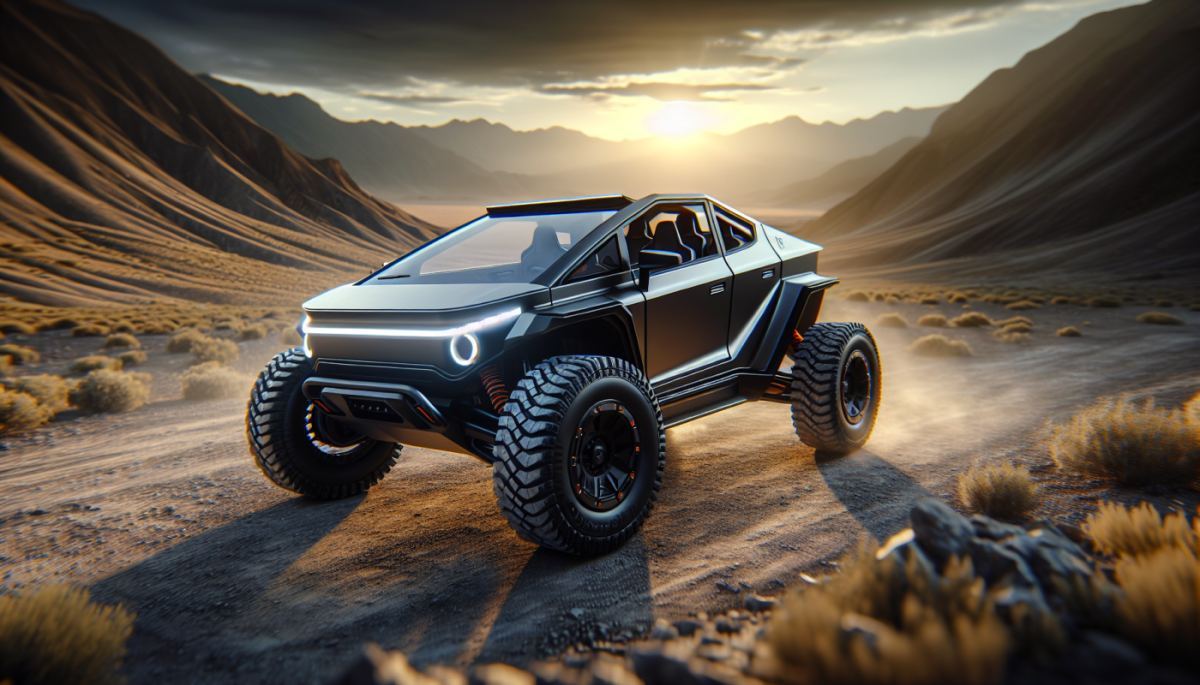
Suzuki has spent decades building a reputation on small, capable, go-anywhere vehicles. The Jimny became a cult object. The original Vitara carved out a loyal following among drivers who wanted something tougher than a city crossover but didn't need a full-size truck. So when Suzuki finally enters the electric SUV market with the e-Vitara, the question isn't just whether it can compete on range or charging speed. The real question is whether it can carry the brand's rugged DNA into an era defined by battery packs and software-defined drivetrains.
The e-Vitara arrives as Suzuki's first fully electric SUV, and the company has made a deliberate choice to position at least one variant as something more than urban transport. That version features increased ride height and a system Suzuki calls Allgrip, the brand's take on intelligent all-wheel drive. In the context of an EV, that combination is more interesting than it might first appear. Electric motors deliver torque instantaneously, which is a genuine advantage in low-traction situations. Pair that with a system designed to distribute power between axles based on grip conditions, and you have the mechanical foundation for a capable off-road machine, assuming the software and suspension geometry are tuned to match.
First drive impressions suggest Suzuki has taken that tuning seriously. The ride height gives the e-Vitara genuine ground clearance rather than the cosmetic lift that many "adventure" crossovers offer. The Allgrip system responds quickly to changing surfaces, which matters more on loose gravel or wet grass than on any spec sheet. For a brand whose customers have historically chosen Suzuki precisely because they wanted something that could handle a dirt road without drama, this is the right instinct.
The e-Vitara enters a market that is simultaneously booming and brutally competitive. Compact electric SUVs are now the default product category for nearly every automaker with electrification ambitions. Volkswagen, Hyundai, Kia, Renault, and a growing roster of Chinese manufacturers are all fighting for the same buyer: someone who wants an EV but also wants practicality, reasonable range, and a price point that doesn't require a significant financial stretch.
What Suzuki is attempting is a form of differentiation through identity rather than specification. The e-Vitara may not lead the segment on range figures or charging architecture, but it is betting that a meaningful subset of buyers will choose it because it feels like a Suzuki, because it carries the suggestion of capability, and because the brand has earned trust among drivers who actually use their vehicles in conditions beyond a supermarket car park.
This is a legitimate strategy, but it carries real risk. The off-road credibility of an EV is difficult to communicate in a showroom, and most buyers will never test it. If the e-Vitara's Allgrip system and ride height don't translate into a noticeably different driving experience on the kinds of roads Suzuki's core customers actually use, the differentiation collapses into marketing.
There is a second-order consequence worth watching here that goes beyond Suzuki's market share. The e-Vitara represents a broader test of whether legacy automakers with strong niche identities can preserve those identities through electrification, or whether the shift to EVs will flatten brand distinctions as the underlying technology converges.
Electric drivetrains are, in many respects, more modular and interchangeable than combustion engines. Battery packs, motors, and power electronics can be sourced from a smaller number of suppliers, and the acoustic and tactile signatures that once made a Suzuki feel different from a Renault are harder to replicate in an electric vehicle. The brands that survive the transition with their identities intact will likely be those that find new axes of differentiation, whether that is software experience, charging network integration, or, as Suzuki is attempting, genuine capability in specific use cases.
If the e-Vitara succeeds, it will be evidence that a focused, capability-led identity can survive electrification. If it struggles, it will add to a growing body of evidence that the EV transition is not just a powertrain swap but a fundamental reshaping of what automotive brands mean and who they are for. Suzuki's answer to that question is now on the road, and the verdict will arrive not in press drives but in the quieter arithmetic of sales figures and customer retention over the next several years.
Discussion (0)
Be the first to comment.
Leave a comment