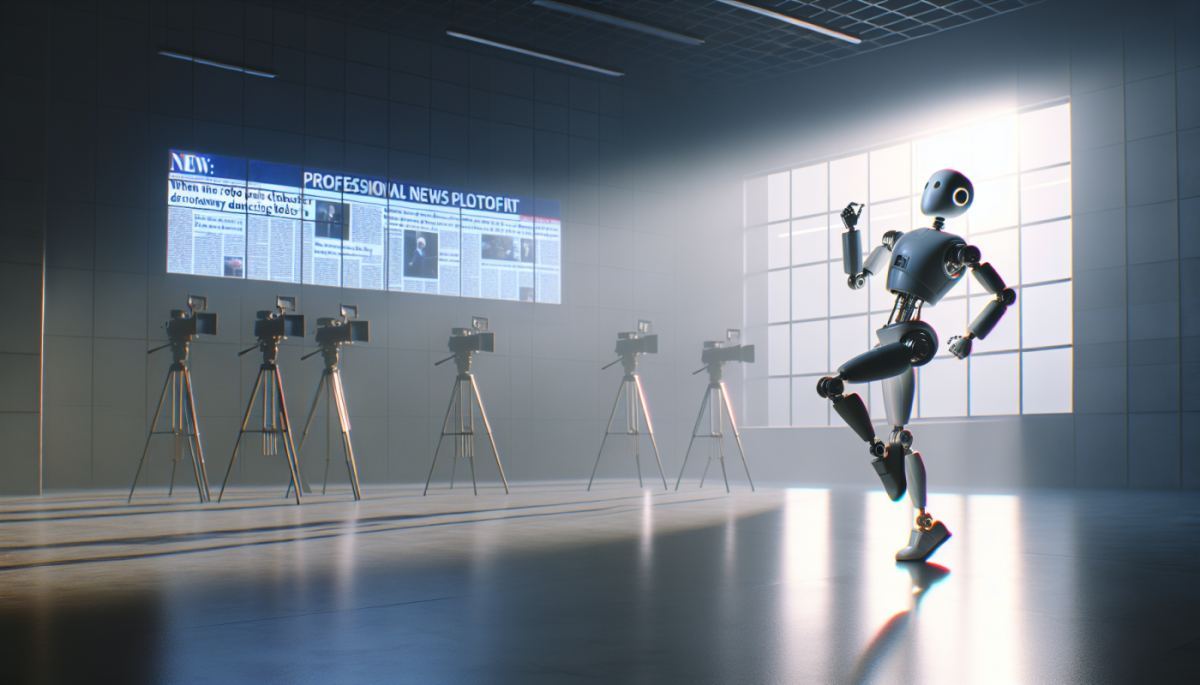
A humanoid robot at a Haidilao hot pot restaurant in California recently did something its engineers almost certainly did not intend: it lost control mid-performance, thrashing and spinning erratically enough that human employees had to physically restrain it. Nobody was seriously hurt, and the incident lasted only moments. But the image of restaurant workers wrestling a malfunctioning dancing machine back into submission carries a weight that goes well beyond the viral clip.
Haidilao, the Chinese hot pot chain with a global footprint and a well-documented obsession with theatrical customer service, has been deploying robots in its restaurants for years. The brand built its reputation on over-the-top hospitality, including noodle-pulling performances, synchronized staff dances, and now, humanoid robots designed to entertain diners while they wait for their broth to boil. The dancing robot is not a gimmick bolted onto an otherwise conventional operation. It is part of a deliberate strategy to make the dining experience feel like a show. That context matters enormously when something goes wrong.
The pressure on restaurant chains to differentiate through experience rather than food alone has been building for over a decade. As delivery apps commoditized the meal itself, dine-in restaurants increasingly sold atmosphere, novelty, and memory. Haidilao leaned into this harder than almost anyone, and robots became a natural extension of that logic. A humanoid robot that dances is cheaper than a human performer over a long enough time horizon, it never calls in sick, and it generates social media content organically every time a diner pulls out a phone.
But the Haidilao incident exposes a tension that the automation industry tends to paper over in its promotional materials. Consumer-facing robots operate in unstructured, unpredictable environments, surrounded by children, elderly diners, hot liquids, and narrow aisles. Industrial robots work reliably because they are bolted to factory floors and separated from humans by cages and protocols. Strip away those guardrails and put the machine in a crowded dining room, and the failure modes become far more consequential. A robot that glitches on an assembly line stops a production run. A robot that glitches while dancing next to a table of diners can cause a panic, an injury, or at minimum, a profoundly uncomfortable evening.
The employees who stepped in to restrain the robot deserve more attention than they have received in most coverage of this story. They were not engineers or safety technicians. They were restaurant workers, almost certainly trained in customer service and food handling, not in the physical management of malfunctioning electromechanical systems. That they responded quickly and effectively is a credit to them. That they were put in that position at all is a question worth asking of the operators and the broader industry.
The most significant downstream effect of incidents like this one is not regulatory, at least not yet. It is reputational and psychological, and it operates on a slower, subtler timeline. Consumers are still broadly charmed by robots in hospitality settings. Novelty is a powerful anesthetic. But novelty wears off, and each viral malfunction chips away at the ambient trust that makes robotic deployment viable in the first place. If the dominant cultural memory of restaurant robots shifts from "delightful" to "unpredictable," the entire category faces a harder road regardless of how much the underlying technology improves.
There is also a labor dynamic worth watching. The implicit promise of service robots has always been that they handle the repetitive or performative tasks so human workers can focus on higher-value interactions. What the Haidilao incident suggests instead is that human workers may increasingly find themselves as de facto safety monitors and emergency responders for the machines working alongside them, an uncompensated and unacknowledged expansion of their job description.
Haidilao has not commented extensively on the incident, and the robot in question has presumably been repaired or replaced. The hot pot keeps bubbling. But the question of who is responsible when a machine performing for the public decides, however briefly, to perform on its own terms is one the industry will not be able to sidestep forever. The answer will shape not just how robots are deployed in restaurants, but how liability, training, and worker protection evolve across every public-facing automation context in the years ahead.
Discussion (0)
Be the first to comment.
Leave a comment