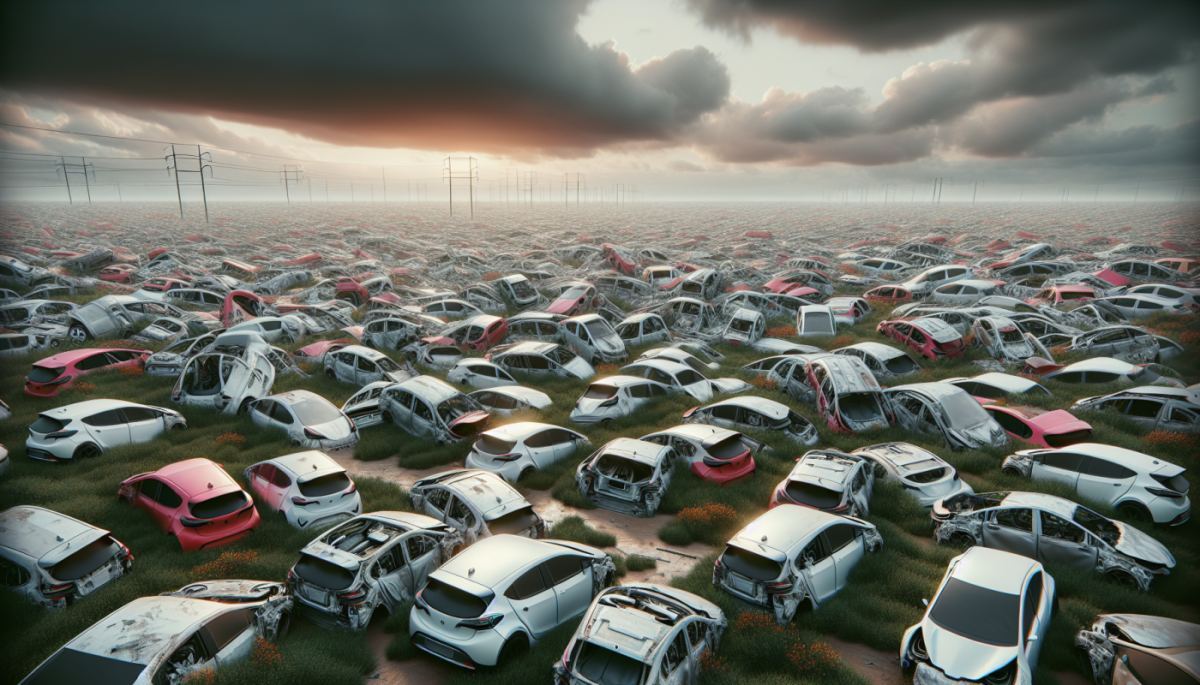
The cancellations started quietly. A model quietly dropped from a configurator page. A launch date pushed back without explanation. A concept car that never made it to production. But by mid-2025, the pattern had become impossible to ignore: automakers across the globe were pulling back on electric vehicle commitments at a pace that would have seemed unthinkable just two years earlier, when every major manufacturer was racing to plant a flag in the EV future.
The list of paused, canceled, or delayed EVs in 2025 and 2026 now spans nearly every segment of the market. Sedans, SUVs, trucks, and even commercial vans have all seen their electric variants shelved or pushed into an uncertain future. The reasons given by automakers are rarely identical, but they rhyme: softening consumer demand, tightening margins, supply chain recalibration, and above all, a policy environment that shifted so dramatically in such a short time that long-term capital planning became something close to guesswork.
To understand why so many EVs are being canceled now, it helps to understand the investment cycle that preceded it. Automakers typically commit to a new vehicle platform five to seven years before it reaches a showroom. The wave of EV announcements that crested between 2020 and 2023 was largely a response to regulatory signals: tightening emissions standards in the EU, aggressive EV mandates in California that other states were expected to follow, and the Inflation Reduction Act's generous consumer tax credits and manufacturing incentives in the United States. Billions were allocated. Factories were retooled. Supplier contracts were signed.
Then the signals changed. The political reversal in Washington brought uncertainty over the IRA's EV provisions. Several states began reconsidering their adoption of California's zero-emission vehicle standards. In Europe, the debate over the 2035 internal combustion engine phaseout reopened with unexpected ferocity. For automakers already stretched thin by post-pandemic capital demands, the calculus shifted fast. Committing further to an EV platform when the regulatory floor might disappear is not a risk most CFOs are willing to absorb, regardless of what the engineering teams believe about the technology's long-term trajectory.
The cruelest irony is that the companies most exposed are often those that moved fastest. Manufacturers who retooled plants, trained workers, and restructured supply chains around EV production are now sitting with sunk costs and no clear path to the volume needed to recover them. Those who hedged, keeping hybrid lines warm and delaying full electrification commitments, now look prescient rather than timid.
The second-order effects of this retreat are only beginning to surface, and they run deeper than the auto industry itself. The EV supply chain is not a simple linear system. It is a web of interdependencies connecting lithium miners in Chile and Australia, battery cell manufacturers in South Korea and China, cathode material processors, software developers, and thousands of tier-two and tier-three suppliers who retooled their own operations based on projected EV volumes that are no longer materializing.
When an automaker cancels a model, it does not simply remove a car from a website. It withdraws a purchase commitment from a battery supplier, who in turn reduces orders from a cell manufacturer, who scales back contracts with a mining operation that had already borrowed against future demand. The feedback loop runs in both directions: falling EV volumes reduce the incentive for suppliers to invest in cost reduction, which keeps battery prices higher than they might otherwise be, which in turn makes EVs harder to price competitively, which suppresses demand further. It is a self-reinforcing contraction, and it is already underway.
There is also a workforce dimension that rarely makes headlines. The communities that retrained around EV manufacturing, the workers who moved into battery plant jobs, the local economies that built tax bases around promised EV facilities, are now absorbing a disruption that no one in those communities caused and few of them saw coming.
What makes the current moment genuinely difficult to read is that the underlying technology has not stalled. Battery energy density continues to improve. Charging infrastructure, while uneven, is expanding. Consumer familiarity with EVs is higher than it has ever been. The retreat is not a verdict on the technology. It is a verdict on the fragility of building a capital-intensive industrial transition on a foundation of policy commitments that turned out to be far less durable than they appeared. The automakers who survive this contraction intact will likely be those who find a way to stay close enough to electrification to move quickly when the policy environment stabilizes, without betting so heavily that another reversal becomes existential. That is an extraordinarily narrow path to walk.
Discussion (0)
Be the first to comment.
Leave a comment