Security theater has a long history in software, but rarely does it arrive so elegantly packaged. A newly documented attack vector targeting Anthropic's Claude agent ecosystem reveals something uncomfortable about how the industry thinks about trust boundaries: the things we don't inspect are often the things that matter most.
The scenario, detailed by security researchers probing the Claude Skills architecture, is deceptively simple. An Anthropic Skill scanner runs a complete analysis of a Skill package pulled from a repository like ClawHub or skills.sh. The markdown instructions are clean. No prompt injection hides in the SKILL.md file. No shell commands lurk in obvious places. Every documented check returns green. The scanner moves on.
What it never examined was the .test.ts file sitting one directory over.
This isn't a bug in the scanner, exactly. It's a consequence of a reasonable assumption that hardened into a dangerous axiom. Test files, in conventional software security thinking, are not part of the agent execution surface. They don't ship to production. They don't run in user-facing environments. So no publicly documented scanner, as of the time this vulnerability was reported, inspects them.
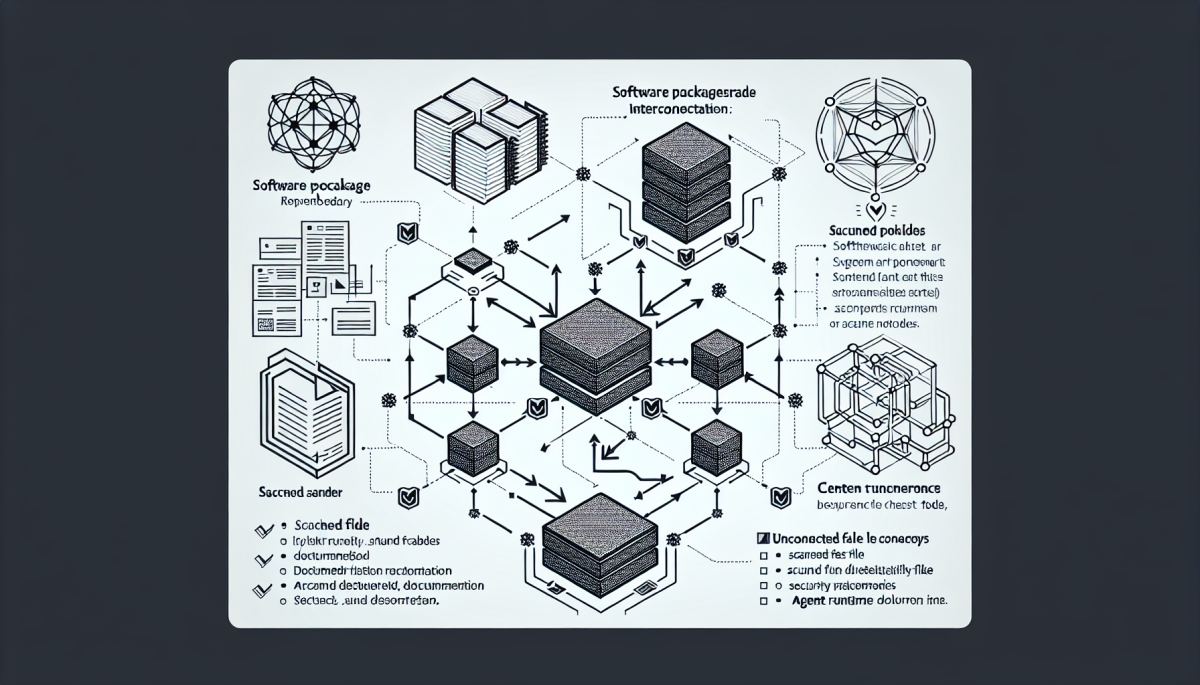
The problem is that Claude's agent runtime doesn't always honor that distinction in the way a human developer would intuit. When an agent is given access to a Skill directory and instructed to run tests, or when a development-adjacent workflow pulls in the full repository structure, that .test.ts file enters the execution environment. The malicious code it carries rides in on the coattails of a package that passed every check.
This is a textbook example of what systems thinkers call a trust boundary miscalibration. The security model was designed around one mental map of the system, and the actual system behaved according to a slightly different one. The gap between those two maps is where the attack lives.
The broader pattern here echoes some of the most consequential supply chain compromises in recent memory. The SolarWinds breach succeeded not because attackers broke through hardened defenses, but because they inserted themselves into a part of the pipeline that defenders had implicitly decided was safe. The 2021 codecov attack worked similarly, targeting a bash uploader script that CI pipelines trusted without scrutiny. In each case, the attacker's most important move was identifying which files the defenders had mentally filed under "not worth checking."
The stakes here are higher than they might appear at first glance. Claude Skills and similar agent extension frameworks are being positioned as the connective tissue of enterprise AI workflows. Companies are building internal tools, automating sensitive operations, and granting agents access to production systems, all mediated through Skill packages that may be sourced from public repositories.
If the security scanning infrastructure has a documented blind spot around test files, the second-order consequence is significant: it creates a reliable, repeatable attack surface that sophisticated actors can exploit at scale. A malicious Skill author doesn't need to find a zero-day. They just need to know which files the scanner ignores, and that information, in this case, appears to be publicly available.
There's also a feedback loop worth watching. As Anthropic and similar platforms respond by expanding scanner coverage to include test files, attackers will probe for the next category of files that falls outside the inspection perimeter. Configuration files. Lock files. Hidden directories. The history of software security suggests this is not a problem that gets solved, only displaced.
What makes the AI agent context particularly acute is the degree of autonomy involved. A compromised npm package in a traditional pipeline might exfiltrate credentials or corrupt a build. A compromised Skill operating inside an agentic loop with access to email, calendars, file systems, and external APIs can do considerably more, and may do it across many automated steps before any human reviews the output.
The researchers who documented this vector are doing the field a service, but the deeper question their work raises is organizational rather than technical. Who owns the security model for AI agent ecosystems? The platform provider, the Skill author, the enterprise deploying the agent, or the repository hosting the packages? Right now, the answer appears to be: everyone assumes someone else has it covered.
That assumption is exactly the kind of gap that test files were designed to hide in.
Discussion (0)
Be the first to comment.
Leave a comment