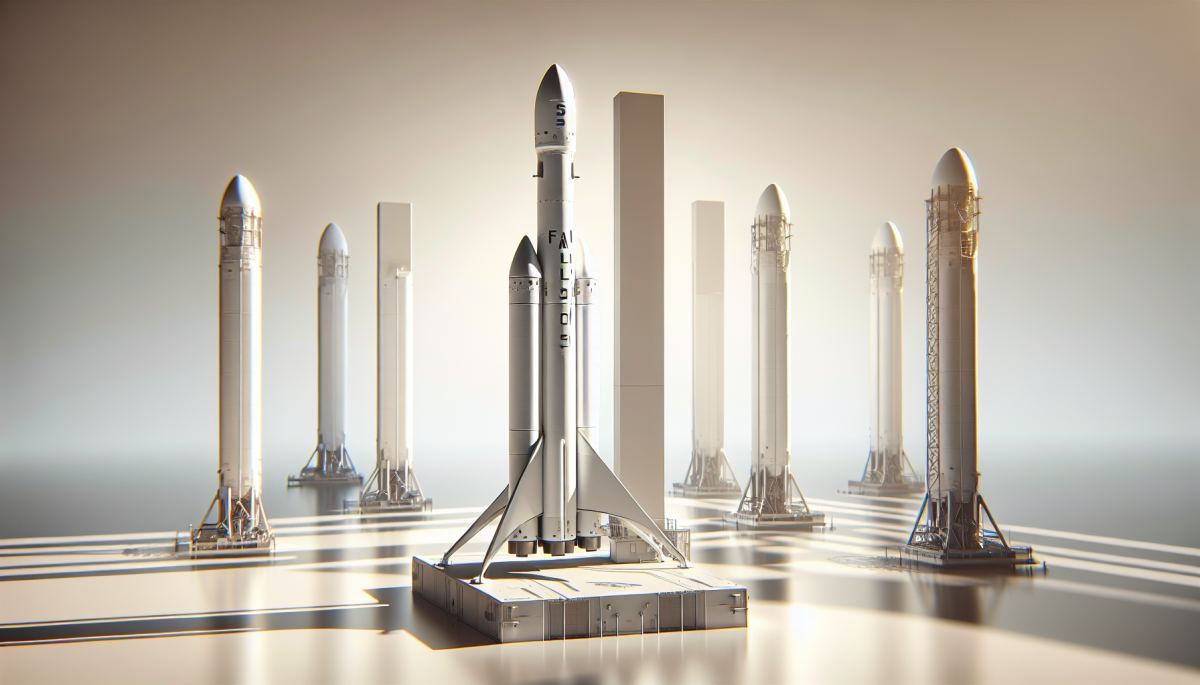
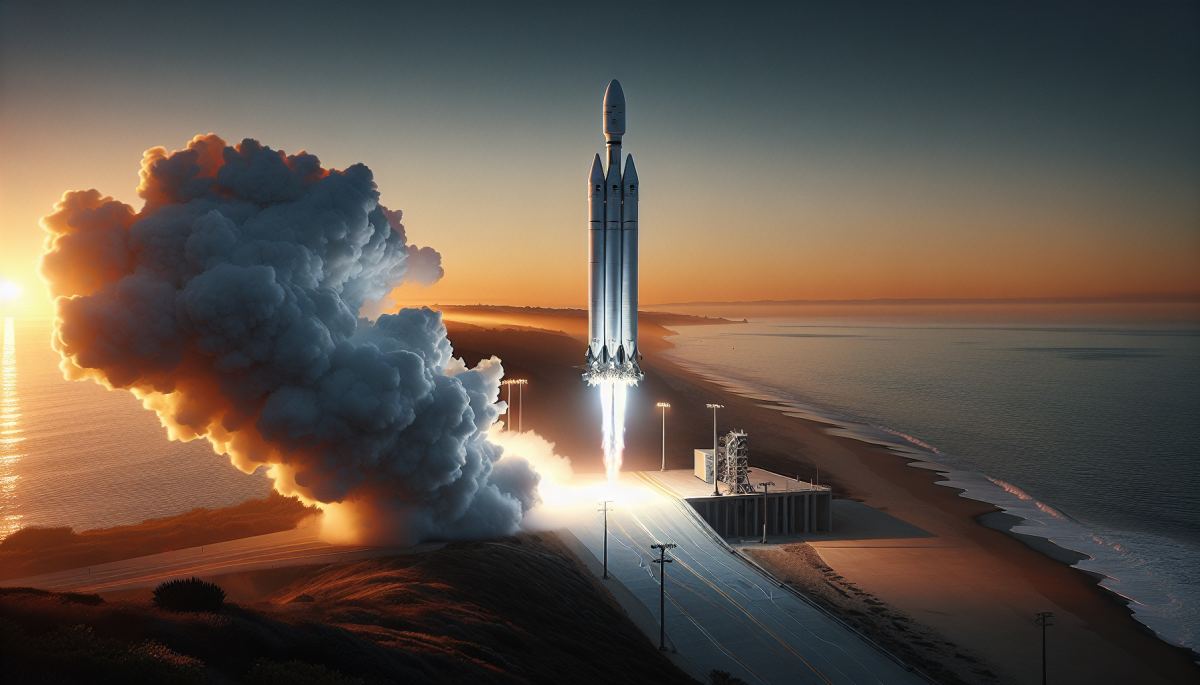
Vandenberg Space Force Base, perched on California's central coast, is about to get a lot busier. SpaceX has signaled that the facility will become its most active launch site in the near term, a logistical shift that sounds routine until you consider what's driving it: the company is beginning to move on from the Falcon 9, the rocket that arguably changed the economics of spaceflight more than any vehicle since the Saturn V.
The Falcon 9 is, by almost any measure, the most successful orbital rocket ever built. It has completed well over 200 successful missions, pioneered the now-standard practice of landing and reusing first-stage boosters, and made SpaceX the dominant force in commercial launch. Its reliability record is the envy of every aerospace program on Earth. And yet the architecture of ambition works in a particular way: the tool that gets you to the top is rarely the one that keeps you there.
SpaceX's longer-term trajectory is unmistakably pointed toward Starship, the fully reusable, stainless-steel behemoth being developed at Starbase in South Texas. Starship is designed to carry far more payload than the Falcon 9 at a fraction of the per-kilogram cost, at least in theory. But Starship is not yet operational for commercial missions, and the gap between a rocket that works and a rocket that works reliably enough to sell is measured in years, not months.
That gap is precisely why Vandenberg matters right now. As SpaceX manages the transition, it needs to keep its manifest full and its customers confident. Vandenberg's geography makes it ideal for polar and sun-synchronous orbits, the kind favored by Earth observation satellites and certain national security payloads. Concentrating launches there reflects a deliberate effort to maximize Falcon 9 utilization during what is effectively a bridge period, keeping revenue flowing while Starship matures.
There is also a subtler dynamic at work. By designating Vandenberg as its busiest site, SpaceX is distributing operational load away from Cape Canaveral, which will likely become the primary hub for Starship once that vehicle enters regular service. The company is, in other words, already reorganizing its physical infrastructure around a future that hasn't arrived yet.
The retirement of a dominant platform is never purely a technical event. It reshapes markets, supply chains, and competitive dynamics in ways that ripple outward for years. The Falcon 9's success created an entire ecosystem: satellite manufacturers who designed their spacecraft around its fairing dimensions, insurers who priced risk based on its track record, and launch brokers who built businesses on its predictable cadence. When Starship eventually takes over, all of those calibrations will need to be redone.
For competitors, the transition represents a narrow window. Rocket Lab, United Launch Alliance with its Vulcan Centaur, and Europe's Ariane 6 are all vying for customers who might feel uncertain about booking on a rocket that is being phased out or one that hasn't yet proven itself at scale. The question of whether any of them can convert that uncertainty into durable market share is one of the more interesting strategic puzzles in the industry right now.
There is also a second-order consequence that deserves more attention than it typically gets. The Falcon 9's reusability model didn't just lower launch costs; it fundamentally altered how investors and governments think about space infrastructure. If Starship delivers on its promise of even more dramatic cost reductions, it could trigger a new wave of space-based services that are currently economically marginal, from in-orbit manufacturing to large-scale broadband constellations far beyond Starlink's current scope. The transition away from Falcon 9 is not just a product cycle. It is potentially the opening move in a restructuring of what space is actually used for.
Vandenberg's coming busy season is, in that sense, a kind of farewell tour for an era. The Falcon 9 will keep flying for years, but the center of gravity is already shifting. The rocket that proved reusability was possible is now making room for the rocket designed to make reusability irrelevant as a differentiator, because everyone will eventually have to match it or exit the market entirely.
How quickly that future arrives, and whether SpaceX can manage the transition without handing competitors the opening they've been waiting for, may be the defining industrial story of the decade.
References
- Berger, E. (2023) — Liftoff: Elon Musk and the Desperate Early Days That Launched SpaceX
- Wall, M. (2024) — SpaceX Falcon 9 rocket: Everything you need to know
- Foust, J. (2024) — SpaceX continues Starship development after latest test flight
- Jones, A. (2024) — Rocket Lab, Ariane 6 and the new launch market
Discussion (0)
Be the first to comment.
Leave a comment