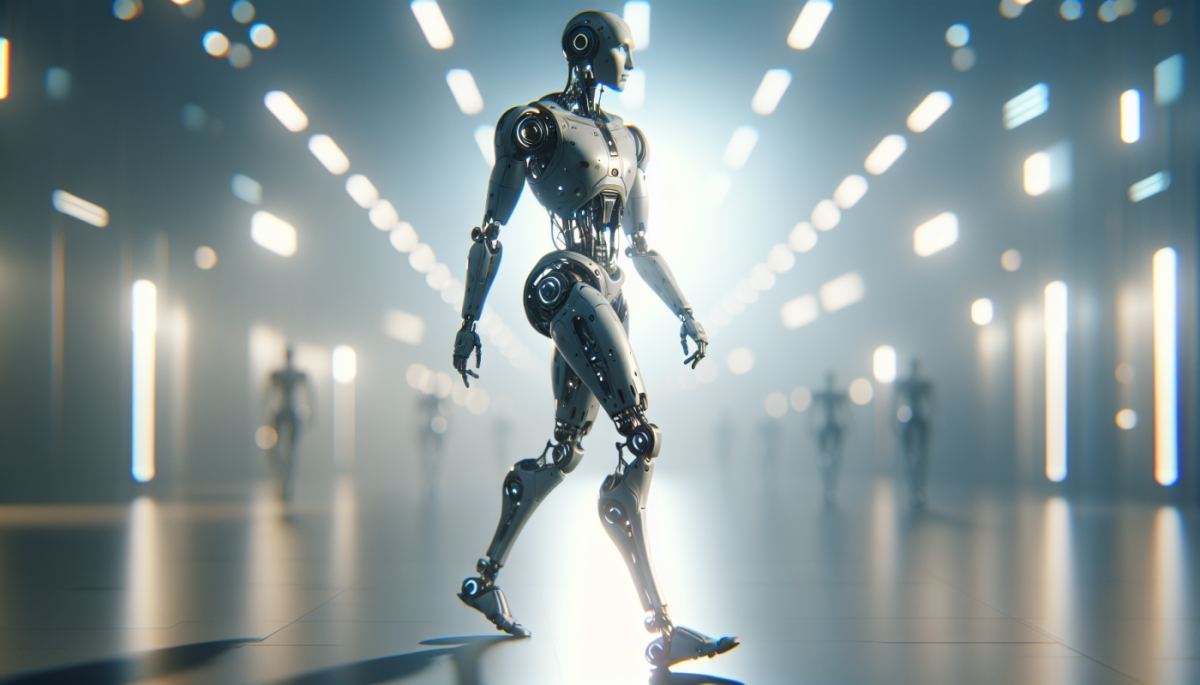
The robots are walking. They are pouring drinks, sorting packages, and performing backflips on YouTube. What the highlight reels don't show is what happens after 45 minutes of continuous operation when the actuator temperature climbs past its rated threshold, the battery voltage sags, and the onboard processor starts making decisions with sensor data that arrived 80 milliseconds late. The gap between a humanoid robot that can perform and one that can reliably deploy is not a marketing problem. It is a physics problem, and the engineering community is only beginning to reckon with how deep it runs.
The humanoid robotics sector has attracted extraordinary capital in recent years, with companies like Figure AI, Agility Robotics, and Tesla's Optimus program pulling billions of dollars in investment on the premise that a general-purpose bipedal machine is finally within reach. But beneath the funding announcements and demo videos, engineers working at the component level are confronting a set of barriers that do not yield to enthusiasm or venture capital. They yield, slowly and partially, to physics, materials science, and control theory.
Bipedal locomotion is one of the most computationally and mechanically demanding tasks a robot can perform. Unlike wheeled or tracked systems, a humanoid walking on two legs is perpetually falling and catching itself, managing a dynamic balance problem that requires continuous real-time feedback from inertial measurement units, joint encoders, and force sensors embedded in the feet. The modeling complexity alone is staggering. A full humanoid body has dozens of degrees of freedom, and the control system must account for how each joint's movement affects the momentum and stability of every other part of the structure, all while the environment underfoot is changing.
Sensor fusion sits at the heart of this challenge. A robot navigating a warehouse floor must reconcile data from cameras, lidar, proprioceptive sensors, and contact force arrays, and it must do so fast enough that the resulting motor commands are still relevant by the time they arrive at the actuators. Latency is not a minor inconvenience here. An 80-millisecond delay in a bipedal system operating at walking speed can be the difference between a corrective step and a fall. The real-time feedback requirements push hard against the limits of current embedded computing architectures, and the software frameworks capable of handling this kind of closed-loop control at scale are still maturing.
What makes this particularly thorny is that laboratory performance rarely predicts field performance. A robot that maintains stable locomotion on a flat, well-lit test floor may struggle profoundly on a slightly uneven loading dock, in variable lighting, or when carrying an asymmetric load. The dynamic environments that humanoid robots are being marketed to operate in are precisely the environments that stress-test every assumption baked into the control model.
Motion control gets most of the attention, but power density and thermal management may be the more stubborn long-term constraints. A humanoid robot performing physical labor draws substantial current through its actuators, and electric motors generate heat as a direct byproduct of that work. In a human body, the circulatory system handles thermal regulation with elegant efficiency. In a robot, heat has to go somewhere, and the options are limited: passive dissipation through the chassis, active cooling systems that add weight and complexity, or operational duty cycles that keep the machine from running long enough to overheat.
None of these solutions are satisfying for commercial deployment. A robot that needs a 20-minute cooldown after every hour of work is not a productivity asset. Active liquid cooling adds mass and introduces new failure modes. And passive thermal management only scales so far before the robot's structural envelope becomes a heat sink rather than a chassis. Battery technology compounds the problem. Current lithium-ion energy density means that a humanoid robot capable of meaningful physical work carries a battery pack that limits its operational window to somewhere between one and four hours depending on task intensity, after which it needs a recharge cycle that can take as long as the work period itself.
The second-order consequence here is one the industry has not fully priced in. If humanoid robots cannot achieve continuous operational availability without significant infrastructure investment in charging stations, thermal management systems, and redundant unit rotation, then the total cost of deployment rises sharply above what the per-unit hardware cost suggests. Warehouses and factories considering humanoid labor will need to redesign workflows around robot duty cycles the same way they once designed shifts around human fatigue, and that redesign is neither free nor trivial. The robots may arrive before the operational playbooks for using them responsibly are written.
The companies that figure out how to close the gap between demo performance and sustained real-world deployment will not necessarily be the ones with the most impressive walking videos. They will be the ones that treated thermal budgets and sensor latency as first-class design constraints from the beginning, not afterthoughts dressed up in a press release.
References
- Westervelt et al. (2007) — Feedback Control of Dynamic Bipedal Robot Locomotion
- Kuindersma et al. (2016) — Optimization-based locomotion planning, estimation, and control design for the Atlas humanoid robot
- Raibert et al. (2008) — BigDog, the Rough-Terrain Quadruped Robot
- Pratt & Williamson (1995) — Series Elastic Actuators
Discussion (0)
Be the first to comment.
Leave a comment