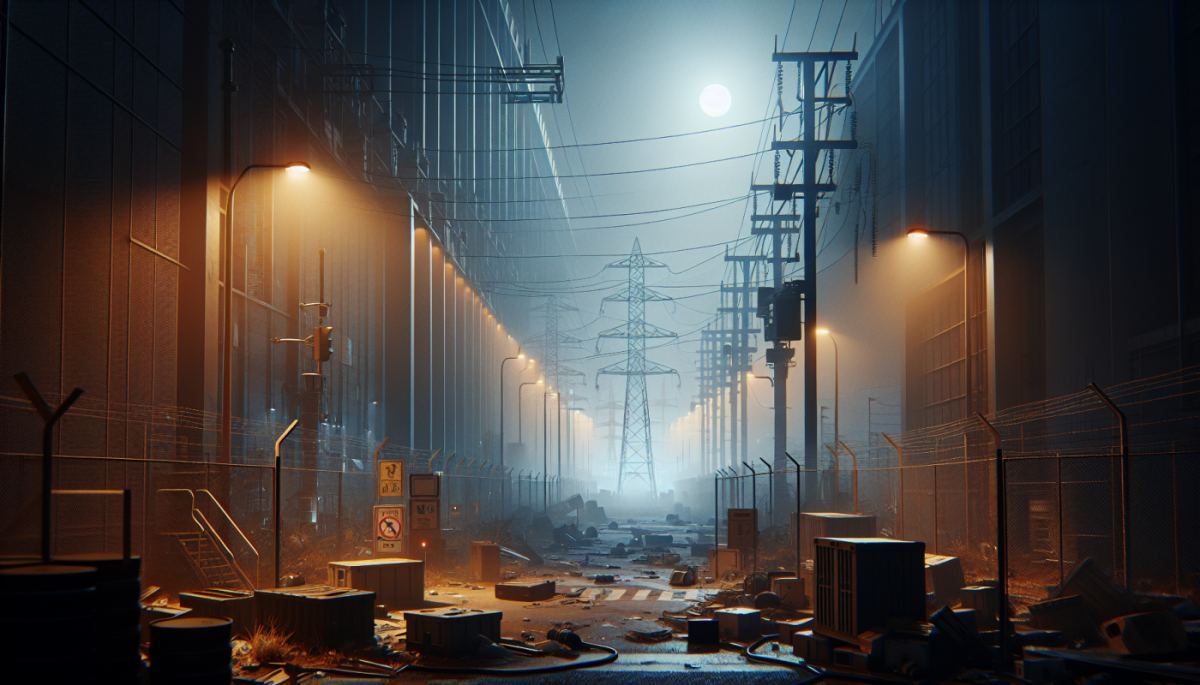
The lights went out across the Iberian Peninsula on April 28, 2025, in what became the most severe grid failure Europe had experienced in a generation. Within seconds, roughly 60 gigawatts of electricity demand simply vanished from the system. Portugal and Spain were dark. The final analysis of what happened is not a story about a single technical failure. It is a story about how policy choices, made incrementally over years, quietly assembled the conditions for catastrophe.
At the center of the post-mortem is a deceptively simple finding: too much generation hardware was permitted to disconnect from the grid right at the edge of what engineers consider normal operating conditions. In a healthy grid, generators are expected to ride through voltage and frequency disturbances, staying connected long enough to help the system stabilize. But the settings governing when equipment could legally disconnect had been calibrated in ways that left the system brittle. When the initial disturbance hit, a cascade of automatic disconnections followed, each one rational from the perspective of an individual asset owner, and collectively catastrophic for the system as a whole.
This is a textbook example of what systems scientists call a tightly coupled failure. The grid had very little slack, very little time between one event and the next, and almost no opportunity for human operators to intervene. The interconnections that normally make a grid resilient, the ability to pull power from a neighboring region, to reroute flows, to absorb a shock, became the very pathways through which the failure spread.
Spain has been one of Europe's most aggressive adopters of renewable energy. Wind and solar now routinely supply the majority of the country's electricity, a genuine achievement that has drawn admiration from energy planners worldwide. But the rapid scaling of inverter-based resources, the electronics that connect solar panels and wind turbines to the grid, introduced a subtle vulnerability that regulators were slow to address.
Traditional synchronous generators, the large spinning turbines powered by gas, coal, or nuclear fuel, provide what engineers call inertia. Their physical rotation resists sudden changes in frequency, buying the system precious fractions of a second to respond to a disturbance. Inverter-based resources do not inherently provide this buffer unless they are specifically programmed and required to do so. As Spain's generation mix shifted, the grid's natural inertia declined. The system became faster and more reactive, which sounds like an advantage until a fault occurs and speed becomes a liability.

Regulators across Europe have known about this dynamic for years. The European Network of Transmission System Operators for Electricity, known as ENTSO-E, has published repeated warnings about declining synchronous inertia and the need for updated grid codes. The gap between those warnings and the actual policy changes implemented in Spain appears to have been significant, and the April blackout may represent the moment that gap closed in the worst possible way.
The immediate economic damage from the blackout ran into the billions of euros. Factories halted, hospitals ran on backup power, transport networks seized. But the longer-term consequences may be more structurally significant.
Insurance and financing markets for renewable energy projects across Europe are already reassessing grid stability risk. If lenders begin pricing in the possibility of extended outages, the cost of capital for new clean energy projects could rise, slowing the very transition that climate targets demand. There is a painful irony embedded in that feedback loop: the push to build more renewables faster, without simultaneously hardening the grid codes that govern their behavior, may end up making future renewable investment more expensive.
For grid regulators, the blackout is likely to accelerate mandatory requirements for synthetic inertia, tighter disconnection thresholds, and larger strategic reserves of synchronous generation. Germany and France are already watching closely, aware that their own grids face similar structural pressures as coal and nuclear plants retire.
The Iberian blackout will almost certainly become a case study in how systems fail not from ignorance but from the slow accumulation of individually reasonable decisions that collectively remove the buffers a complex system needs to survive. The question now is whether European energy policy can move fast enough to rebuild those buffers before the next disturbance finds the same open door.
References
- ENTSO-E (2020) — Inertia and Rate of Change of Frequency (RoCoF) in the CE Power System
- IEA (2021) — Status of Power System Transformation: System Integration and Local Grids
- Perilla et al. (2020) — Performance of Wind Turbines in a Future Power System Defined by Grid Codes
- European Commission (2023) — Commission Regulation on Electricity Transmission System Operation
Discussion (0)
Be the first to comment.
Leave a comment