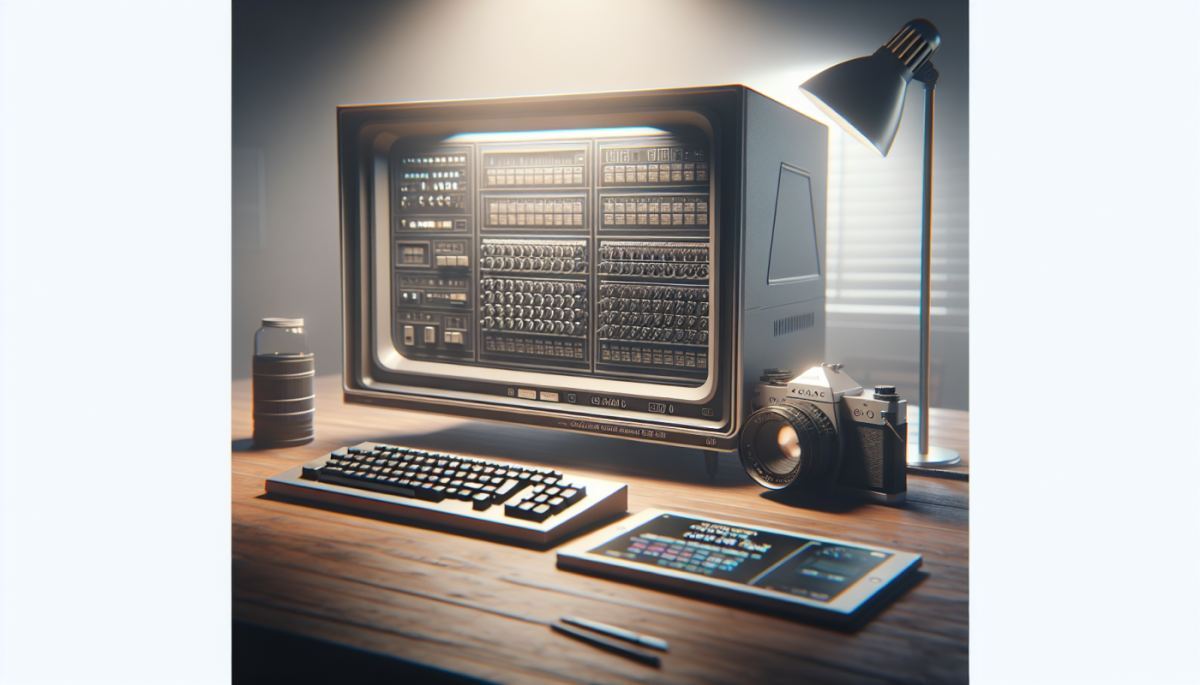
On February 15, 1946, a machine the size of a small house flickered to life inside the Moore School of Electrical Engineering at the University of Pennsylvania. The Electronic Numerical Integrator and Computer, better known as ENIAC, performed calculations in front of a public audience for the first time, and nothing about computing would ever be quite the same again. Eight decades later, the anniversary of that demonstration offers something more than a moment of nostalgia. It is an opportunity to trace the long, strange arc from vacuum tubes and patch cables to the neural networks now reshaping civilization.
ENIAC weighed roughly 30 tons, occupied about 1,800 square feet, and contained nearly 18,000 vacuum tubes. It consumed around 150 kilowatts of power, enough to dim the lights in surrounding buildings when it was switched on, according to accounts from the University of Pennsylvania's own historical records. By the standards of its era, it was a marvel. By the standards of a modern smartphone, it was laughably limited. And yet the conceptual leap it represented, moving from mechanical or electromechanical computation to a fully electronic, general-purpose, programmable architecture, was the kind of threshold crossing that only becomes obvious in retrospect.
The machine was developed under a U.S. Army contract, with the explicit goal of calculating artillery firing tables faster than human "computers," a job title then held by rooms full of people, many of them women, doing arithmetic by hand. The military urgency behind ENIAC is easy to overlook when we celebrate it as a scientific achievement, but that pressure matters. War has historically been one of the most powerful accelerants of technological development, and ENIAC is a textbook case. The funding, the timeline, and the tolerance for experimental risk were all shaped by the demands of conflict.
One of the more uncomfortable truths embedded in ENIAC's history is how long it took to properly credit the six women who programmed it: Jean Jennings Bartik, Frances Bilas Spence, Kay McNulty Mauchly Antonelli, Marlyn Wescoff Meltzer, Ruth Lichterman Teitelbaum, and Frances Elizabeth Holberton. These women were not simply operators following instructions. They had to understand the machine's physical architecture at a deep level, working out how to route calculations through its components without the benefit of any programming language or manual. Their contributions were largely invisible for decades, a pattern that would repeat itself across the history of computing with troubling consistency. Historians like Kathy Kleiman, whose documentary work helped restore their names to the record, have argued that the erasure was not accidental but structural, a reflection of how technical labor performed by women was categorized and valued at the time.
The story of ENIAC's programmers is not a footnote. It is a systems-level warning about how institutions assign credit, and how those assignments shape who enters technical fields in subsequent generations. When the people who do foundational work are made invisible, the pipeline of talent that might follow them is quietly narrowed.
The computational distance between ENIAC and a contemporary AI training cluster is almost impossible to hold in the mind at once. Moore's Law, the observation that transistor density on integrated circuits tends to double roughly every two years, has compounded over eight decades into a gap so vast it borders on the philosophical. The chips powering today's large language models perform operations that would have taken ENIAC longer than the age of the universe to complete. That is not hyperbole. It is arithmetic.
What makes the ENIAC anniversary genuinely worth examining in 2025 is not the machine itself but the feedback loop it initiated. General-purpose programmability meant that the same hardware could be repurposed for an essentially unlimited range of tasks. That flexibility attracted investment, which drove miniaturization, which reduced cost, which expanded access, which generated more applications, which attracted more investment. The loop has been running for eighty years and shows no sign of closing. If anything, the introduction of machine learning into the cycle has accelerated it in ways that even optimistic forecasters from the 1990s did not anticipate.
The second-order consequence worth watching now is energy. ENIAC's 150-kilowatt appetite was considered extraordinary in 1946. Today's largest AI data centers consume gigawatts, and demand is rising faster than the grid in many regions can accommodate. The same compounding dynamic that made computation cheap and ubiquitous is now making it a significant driver of electricity demand, with real implications for carbon targets, grid stability, and geopolitical competition over energy infrastructure. ENIAC was born from a war. The next major inflection point in computing may well be shaped by the scramble for the power to run it.
Discussion (0)
Be the first to comment.
Leave a comment